
Free worksheets
Worksheets, self-reflections, and diagrams built from the ideas on this site. Each one opens as a PDF or an image. Fill the worksheets in on screen, or print them. Every worksheet links back to the article that explains it.
01 Anxiety, Stress, Triggers & Trauma
12 worksheets and diagrams · Read the Anxiety, Stress, Triggers & Trauma guide
Why Did I React That Way? Trigger Worksheet
Map one reaction through the four stages, working backward from the feeling to the story under it.
Why Am I Anxious? Four Kinds of Anxiety Worksheet
Sort a moment of anxiety into the four snakes and match the response to the kind.
Anxiety Self-Care Plan WorksheetSleep, Movement, Breath, and Connection
Sleep, movement, breath, stimulation, and connection: a plan for the body when insight is not enough.
Build Stress Tolerance WorksheetEarly Signals and Chosen Adversity
Track early signals and practice one chosen adversity at a time.
Addiction Replacement Behavior WorksheetWhat Is the Habit Doing for Me?
What the habit is doing for us, and what could do the same job.
Social Anxiety WorksheetWhat Am I Trying to Control?
The quiet contract behind social anxiety: what we are trying to control, and what was never ours to author.

The Four Stages of an Emotional Reaction
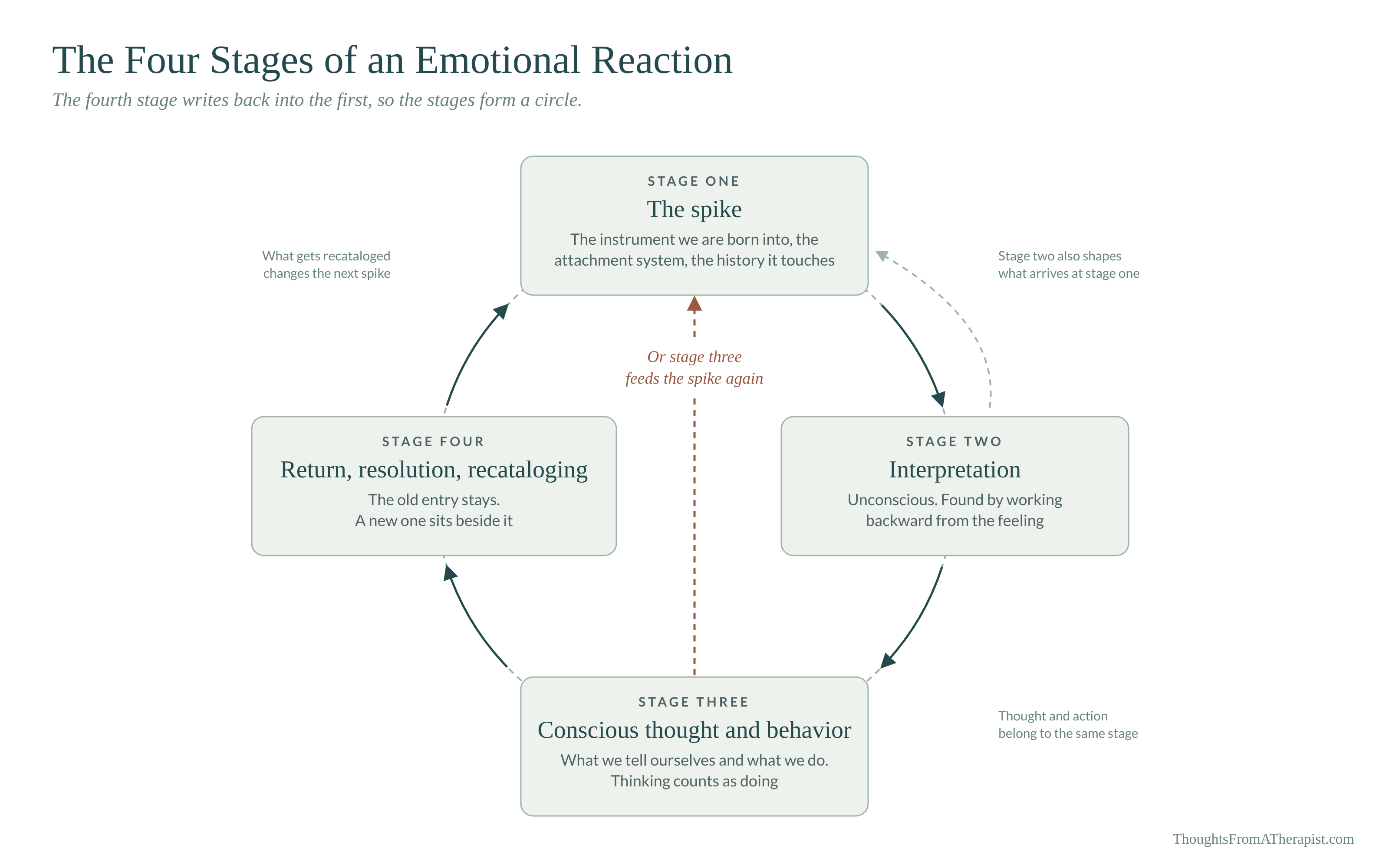
The spike, the interpretation, conscious thought and behavior, and the return that rewrites the next spike.

Four Kinds of Anxiety
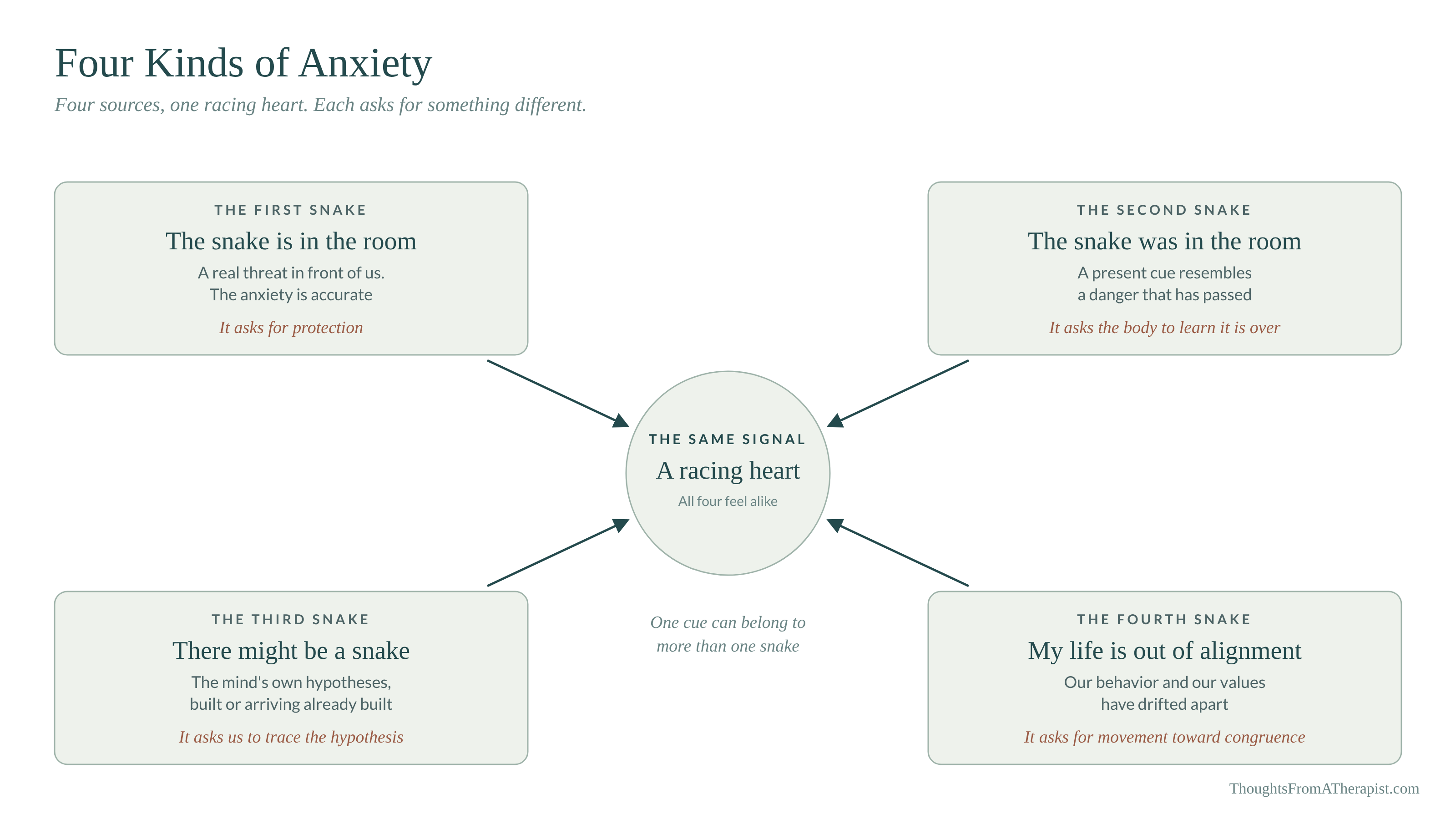
Four places anxiety comes from, one racing heart, and what each kind asks for.

Stress Tolerance
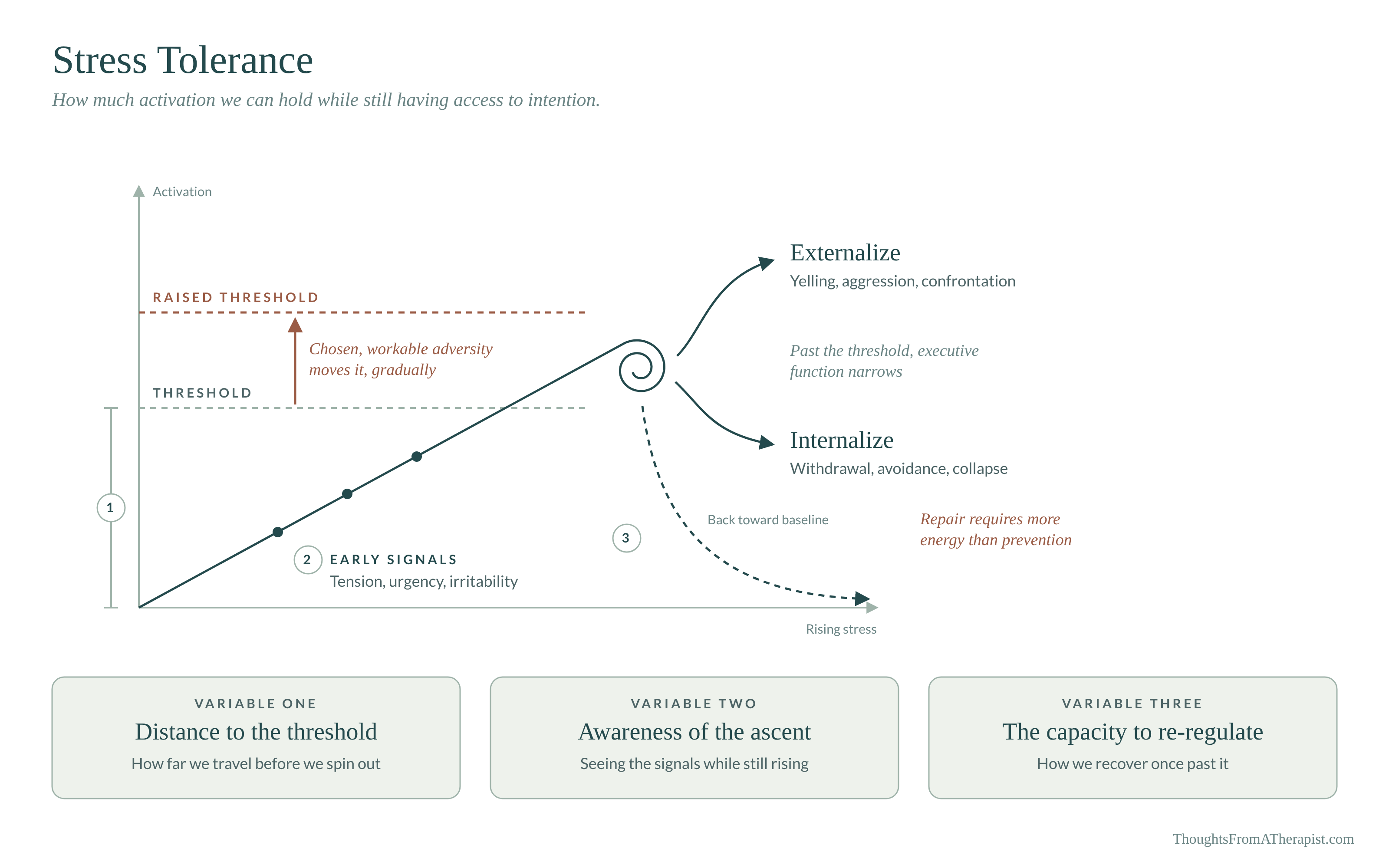
How far we travel before we spin out, and how chosen adversity raises the threshold.

OCD and the Four Stages
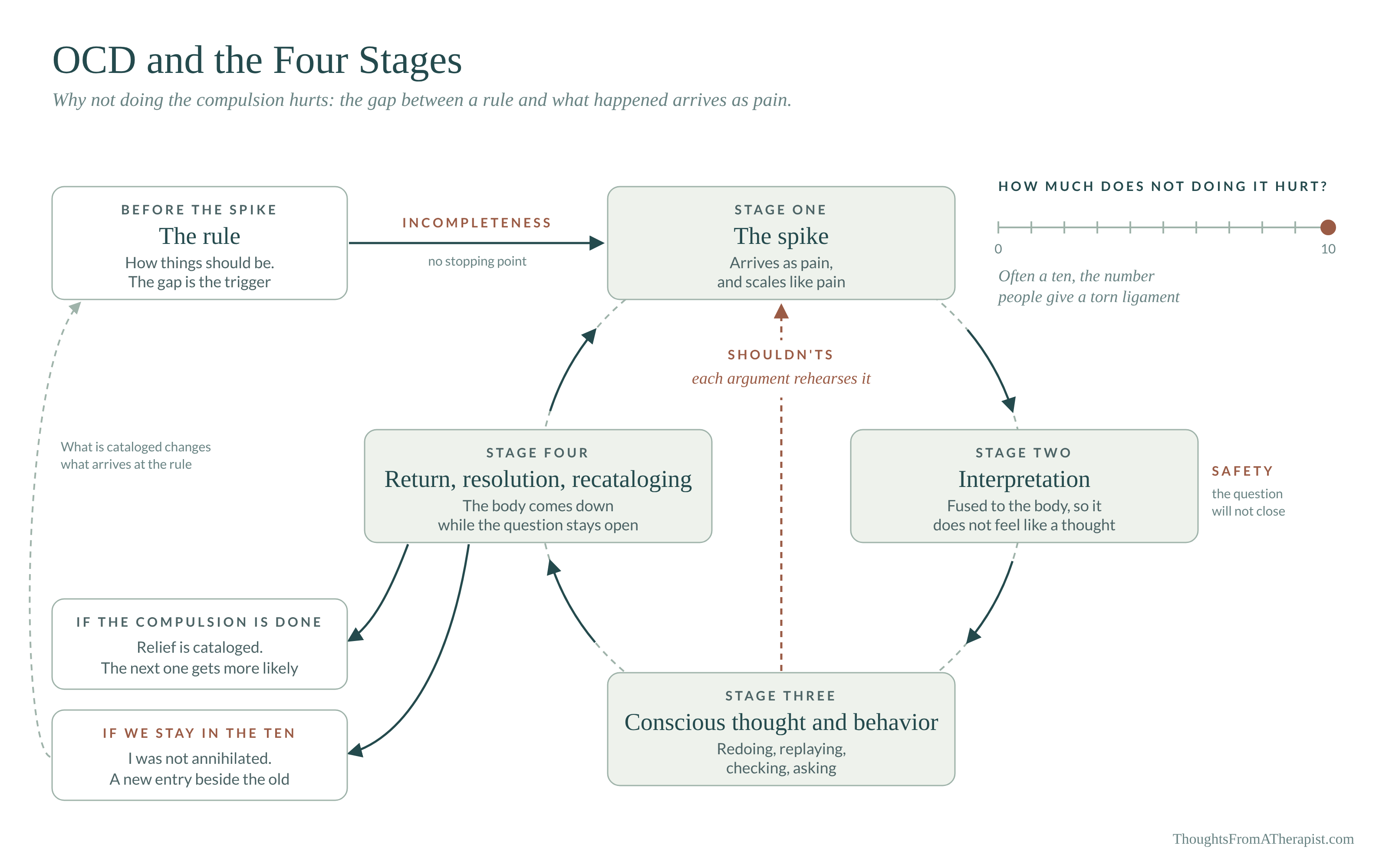
Why not doing the compulsion hurts: the rule arrives before the spike.

PTSD Triggers on a Spectrum
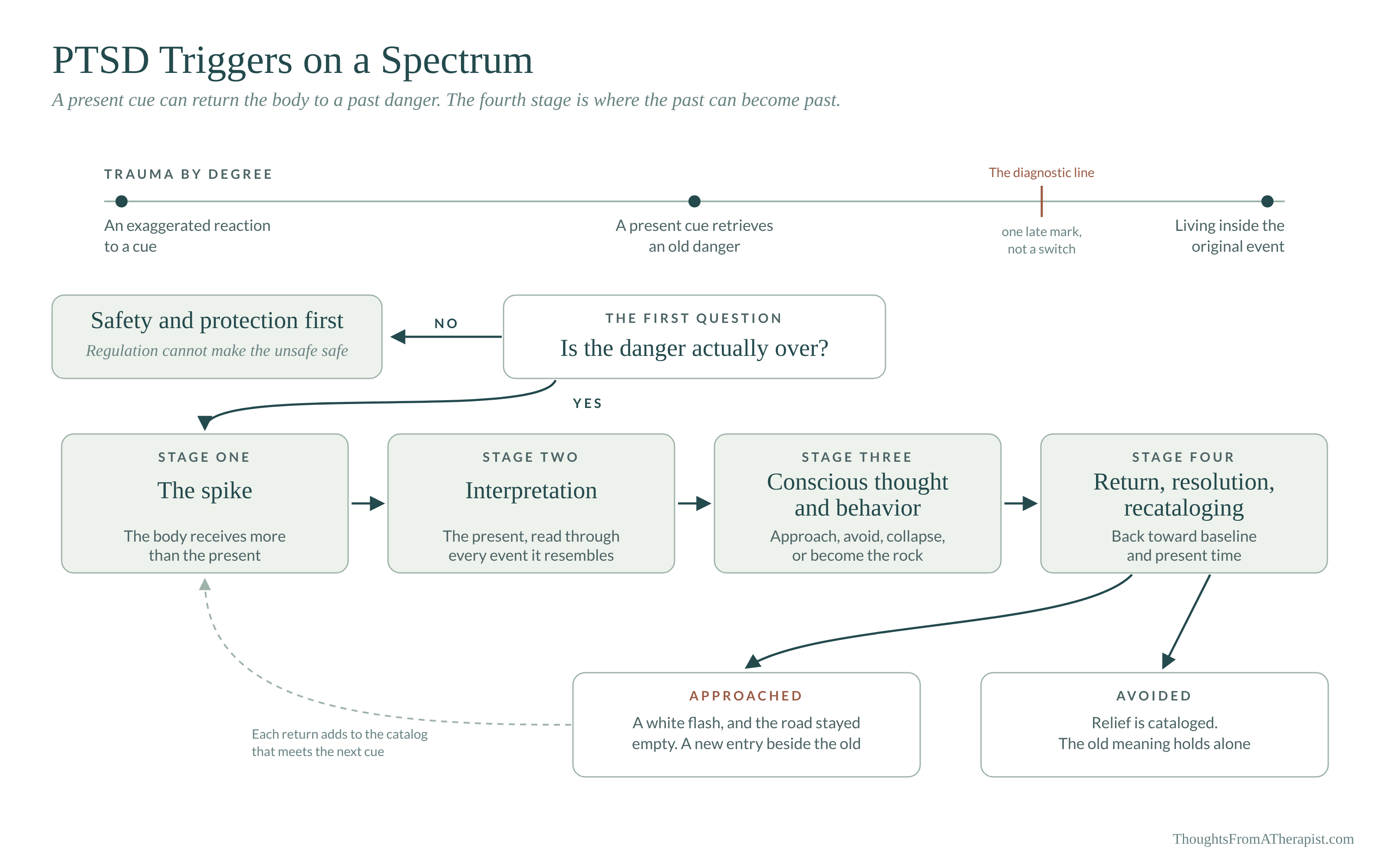
Trauma by degree, and the question that comes first: is the danger actually over?

ADHD and Anxiety
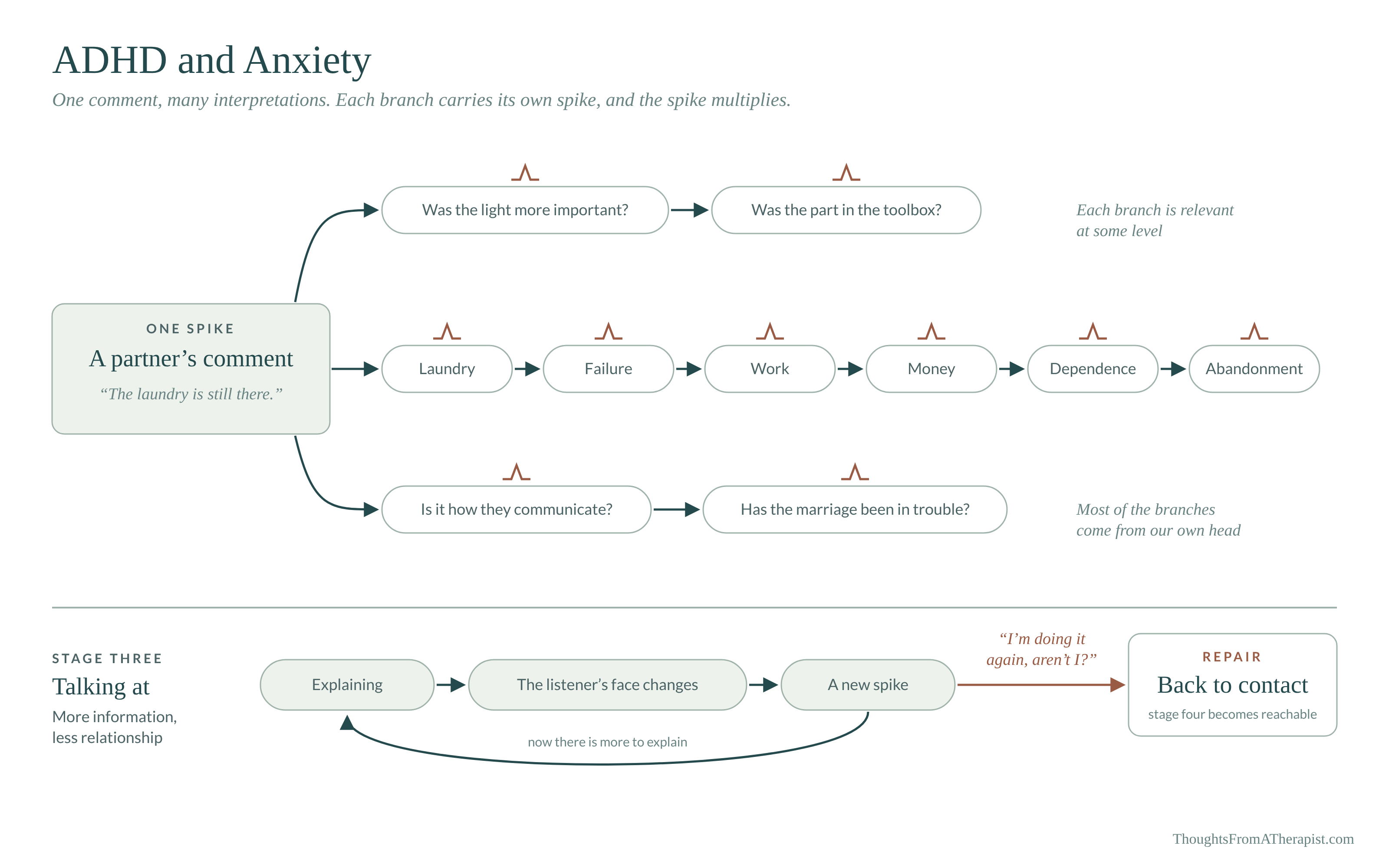
How one comment branches into many worries, and the repair that brings us back.
02 Relationships, Intimacy & Communication
13 worksheets and diagrams · Read the Relationships, Intimacy & Communication guide
Pathways to Importance WorksheetWhat Makes Your Partner Feel Loved
Find the pathways that help each partner feel important, then choose one act for the week.
Bids for Connection WorksheetMapping a Cycle That Starts With Pleasure
Map a cycle that starts with pleasure, and keep the bid alive.
How to Ask Your Partner for What You WantComplaint to Request Worksheet
Turn a complaint into a request our partner can actually meet.
Questions About Your Childhood to Ask Your Partner
Twenty-five questions about childhood to ask a partner, one sitting at a time.
Premarital Counseling Questions Worksheet
What the relationship is for, how we weight our values, and the practical questions before commitment.
Mismatched Desire WorksheetUnwritten Rules About Sex
The unwritten rules about sex we bring into a relationship, examined on our own side first.
Attachment Style Self-ReflectionPatterns by Relationship and Under Stress
Patterns by relationship, calm and under stress. A reflection, not a label.
Relationship Check-InWhich Parts of Our Relationship Need Attention?
Which parts of our relationship are steady, and which need attention now.

Attachment Through the Four Stages
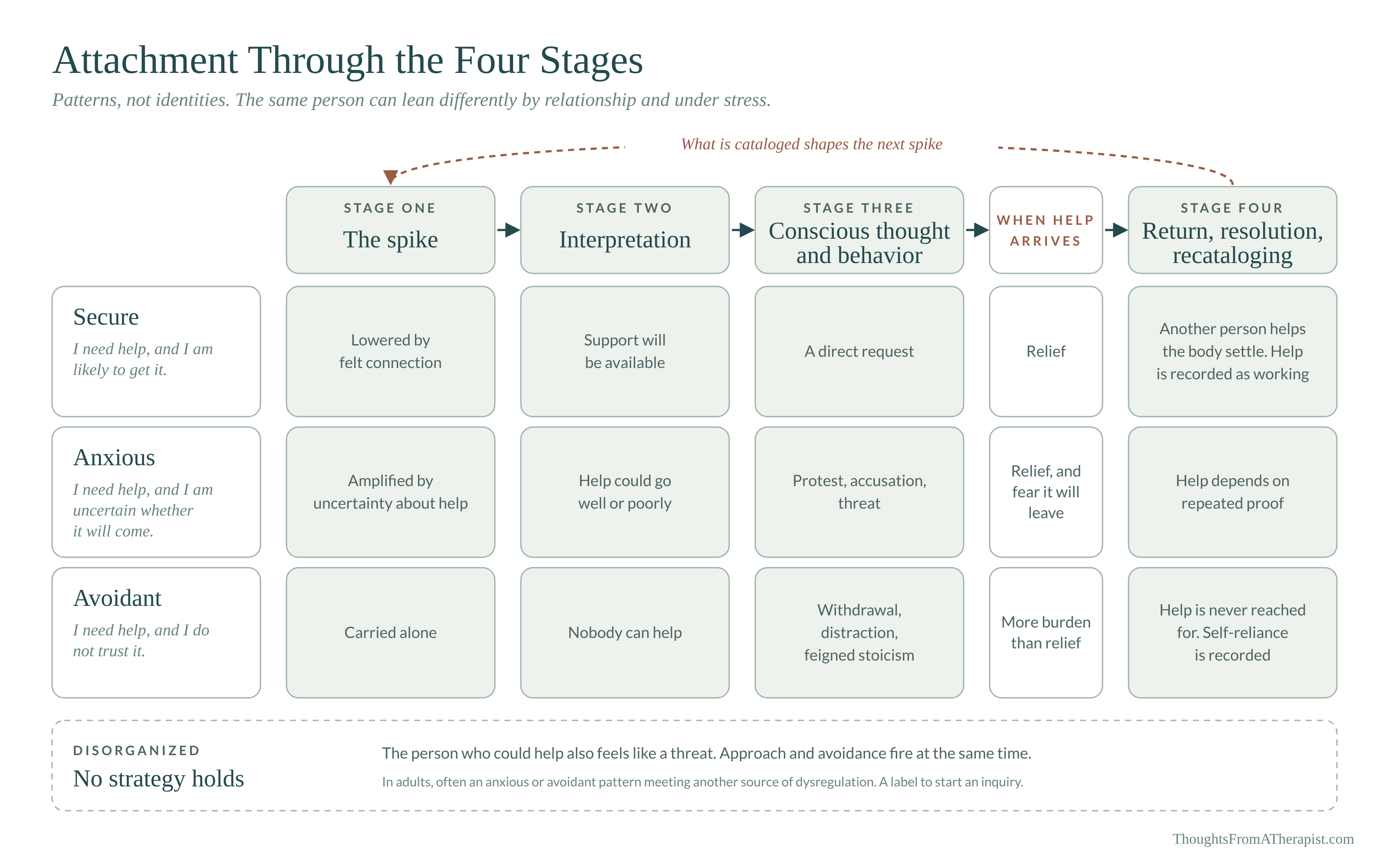
Secure, anxious, avoidant, and disorganized patterns moving through the four stages.

The Four Purposes of Communication
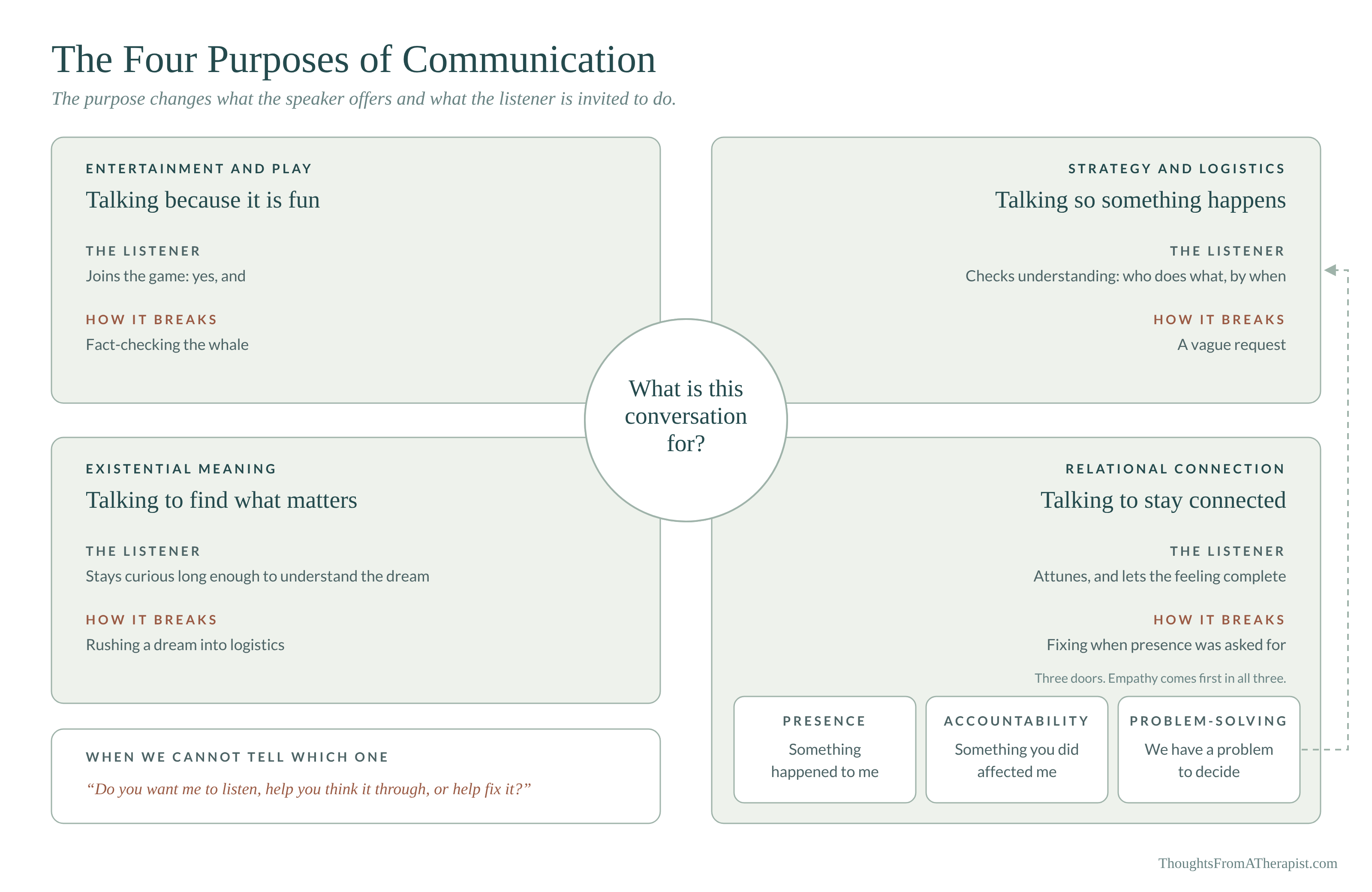
Play, logistics, connection, and meaning: what is this conversation for?

Defensive ListeningSix Ways Attention Leaves
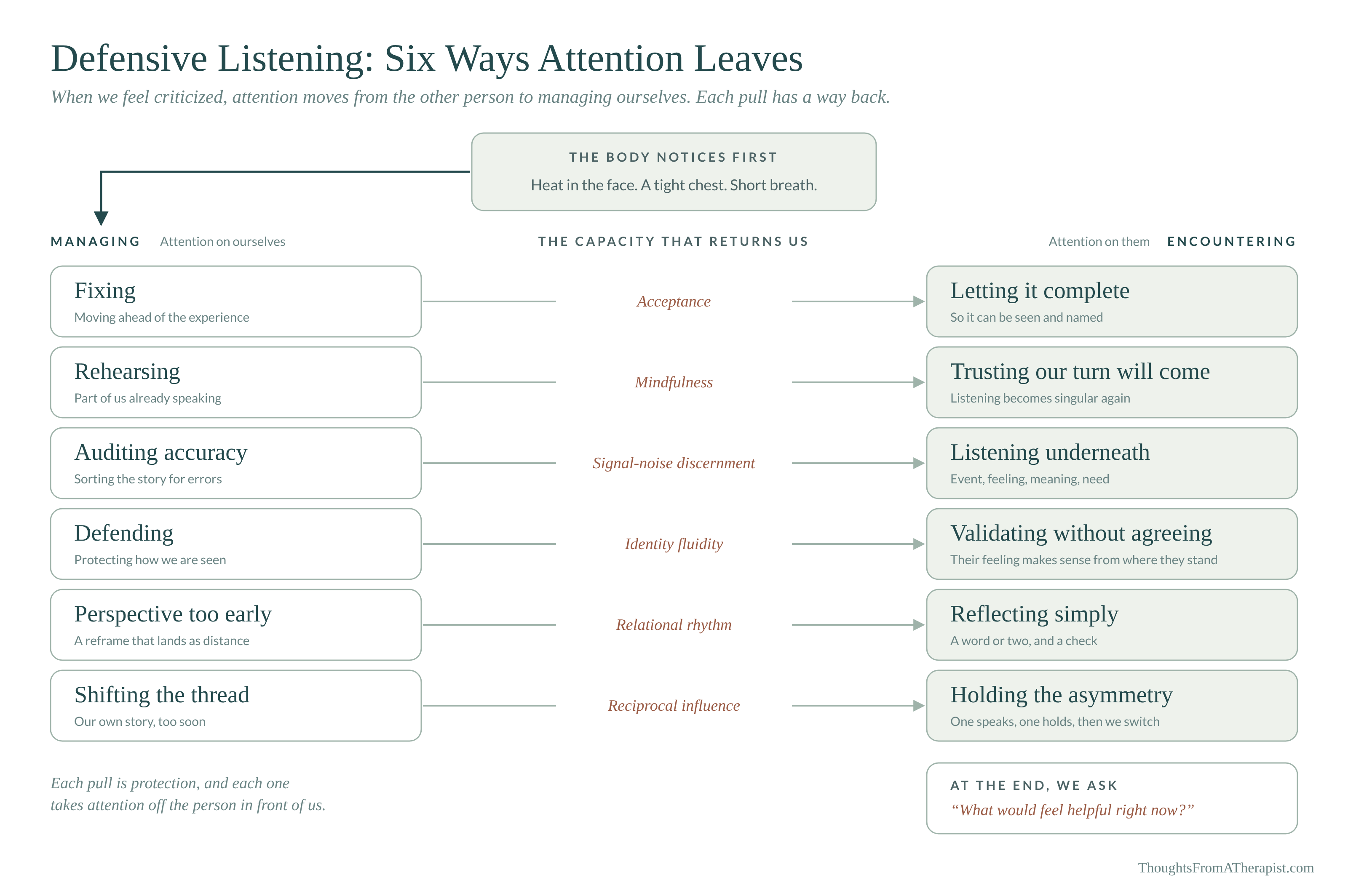
Six ways attention leaves when we feel criticized, and the capacity that brings it back.

Disengagement, Security, and Enmeshment
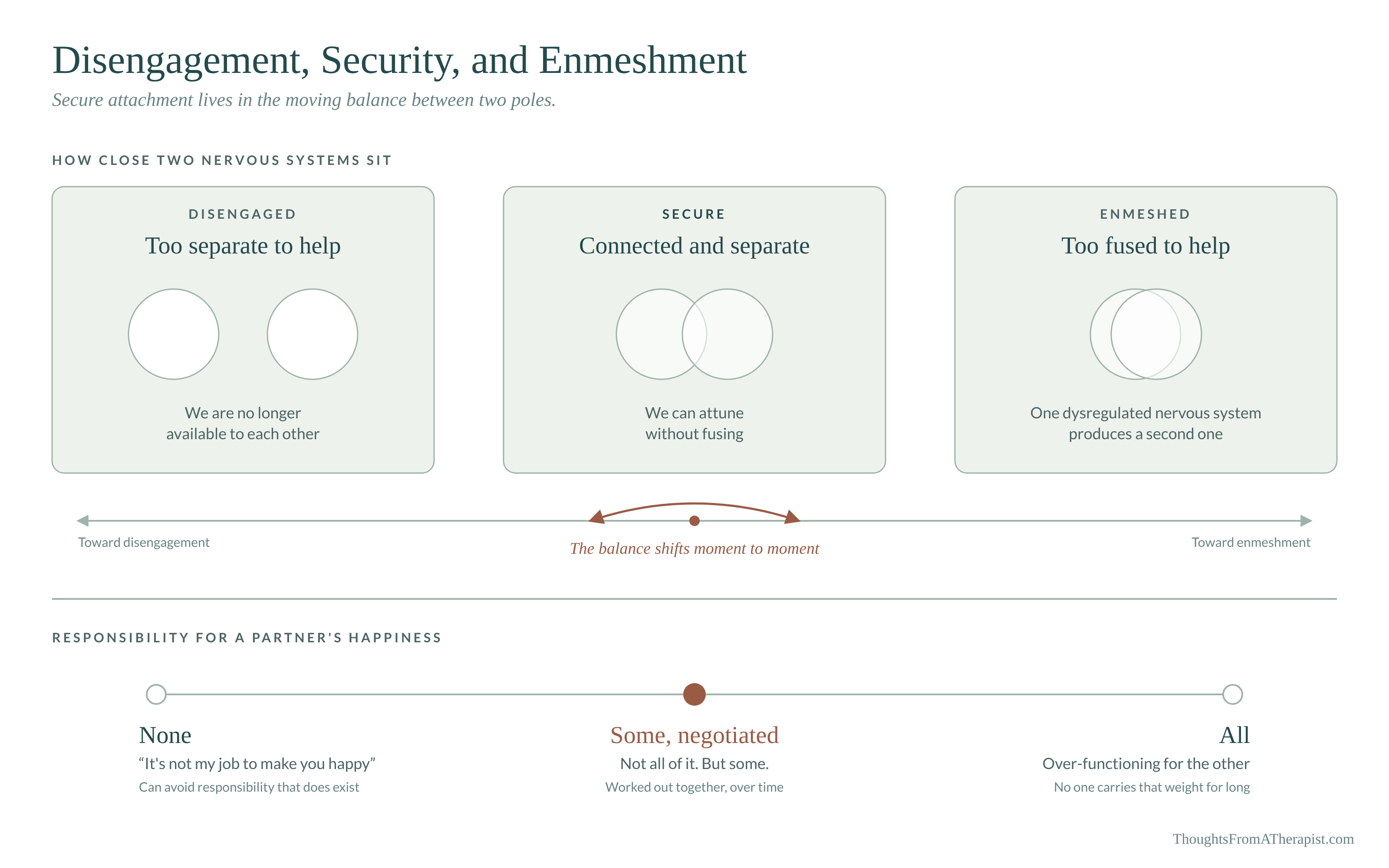
Too separate, too fused, and the moving balance where secure connection lives.

What Is a Long-Term Relationship For?
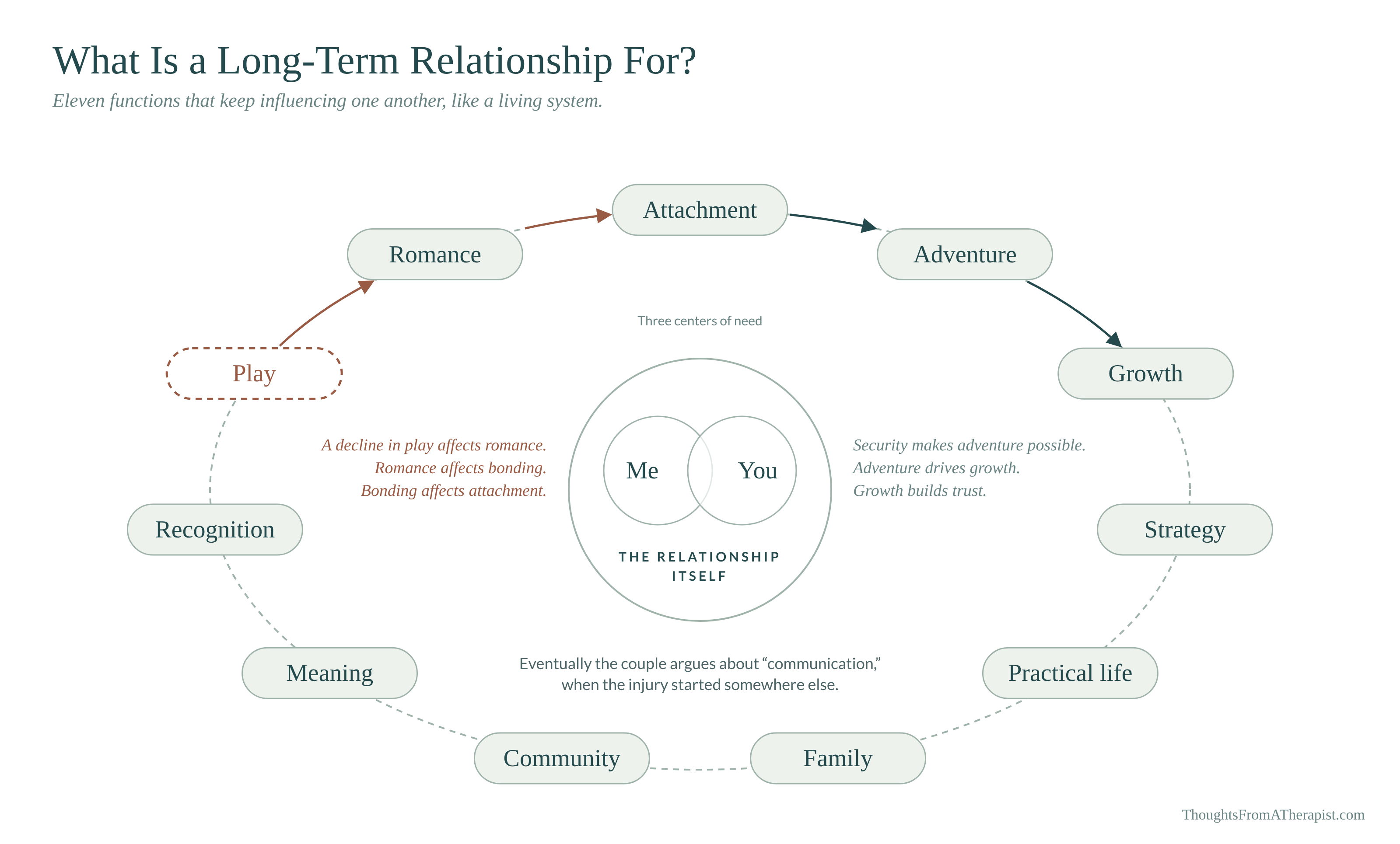
The functions a long-term relationship serves, and how a decline in one spreads to the others.
03 Parenting & Family
8 worksheets and diagrams · Read the Parenting & Family guide
Which Parenting Role Fits This Situation? Four Roles of Parenting Worksheet
Which role fits this situation? Split ten points across the four roles, area by area.
Teen Development Worksheet for ParentsFive Core Tasks of Adolescence
The five core tasks of adolescence, and what we model while they practice them.
Co-Parenting Worksheet for CouplesParenting Values and Disagreements
Parenting values, where they came from, and how two parents pull the same stroke.
Co-Parenting After Divorce WorksheetDouble Binds and a Difficult Co-Parent
Double binds, a difficult co-parent, and the plan we return to.
Genogram WorksheetFamily Patterns Without Blame
Draw three or four generations and find the patterns without assigning blame.

The Four Roles of Parenting
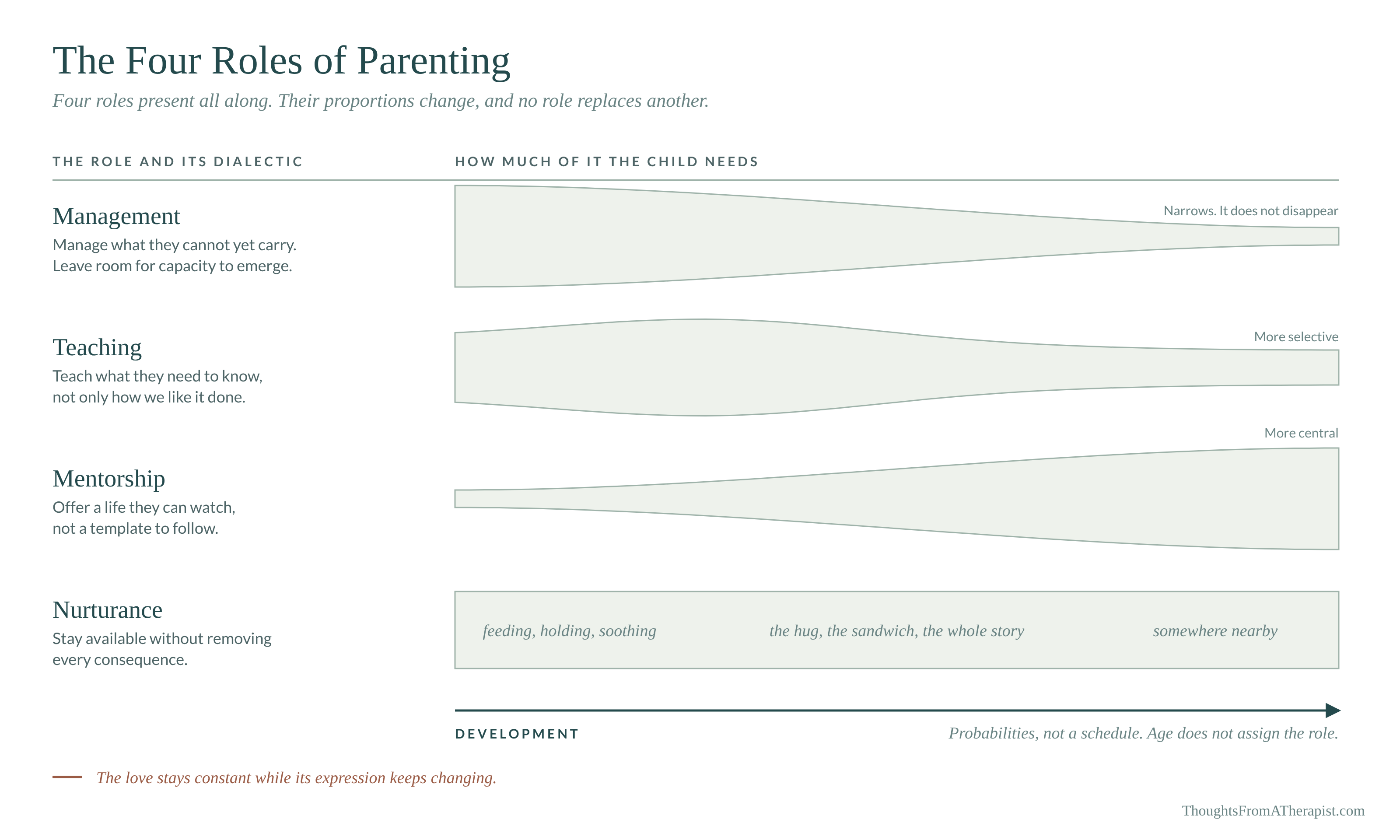
Management, teaching, mentorship, and nurturance: how the mix changes as a child grows.

Five Core Tasks of Adolescent Development
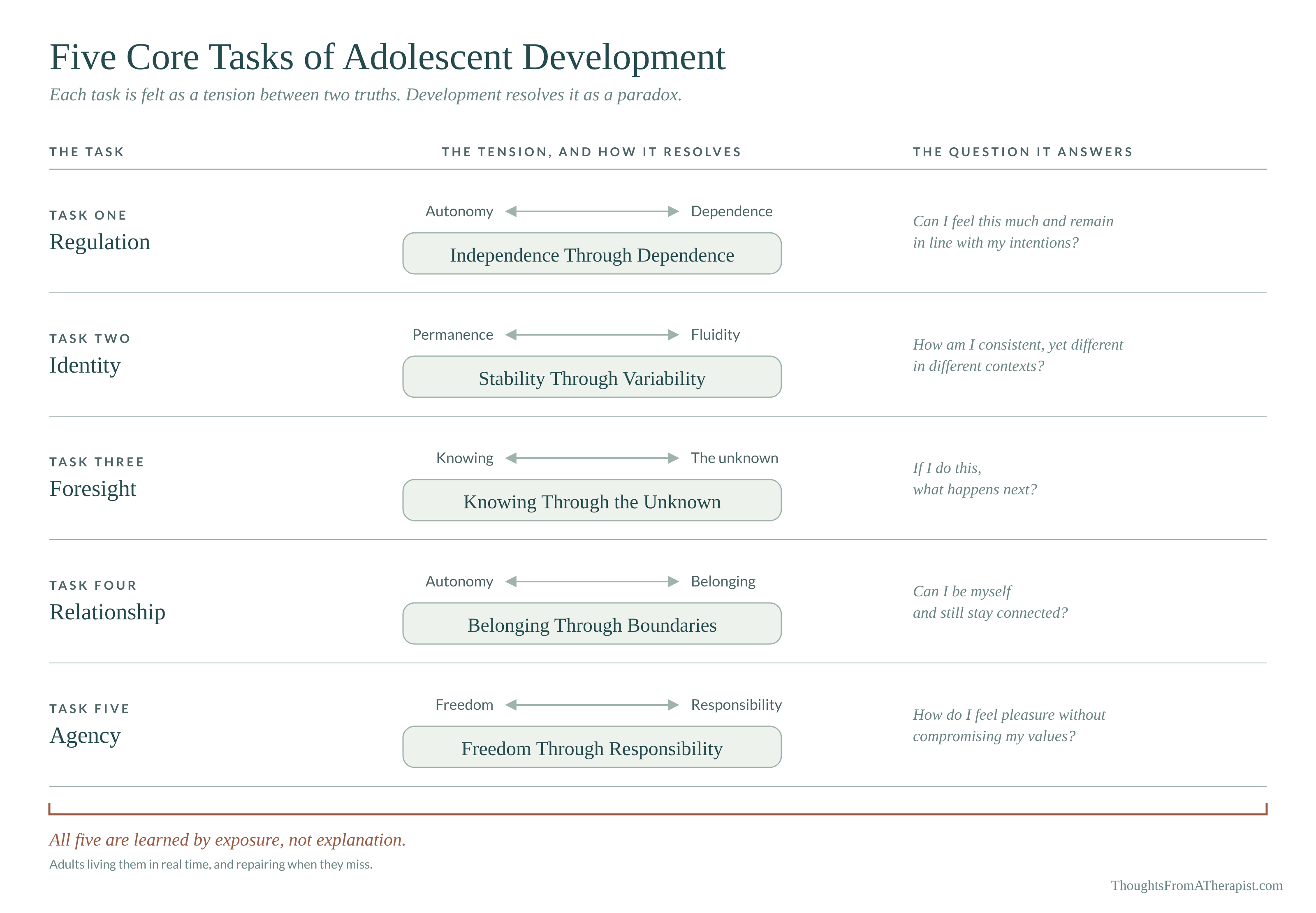
Five tensions every teenager works through, each one a paradox.

A Sample Genogram
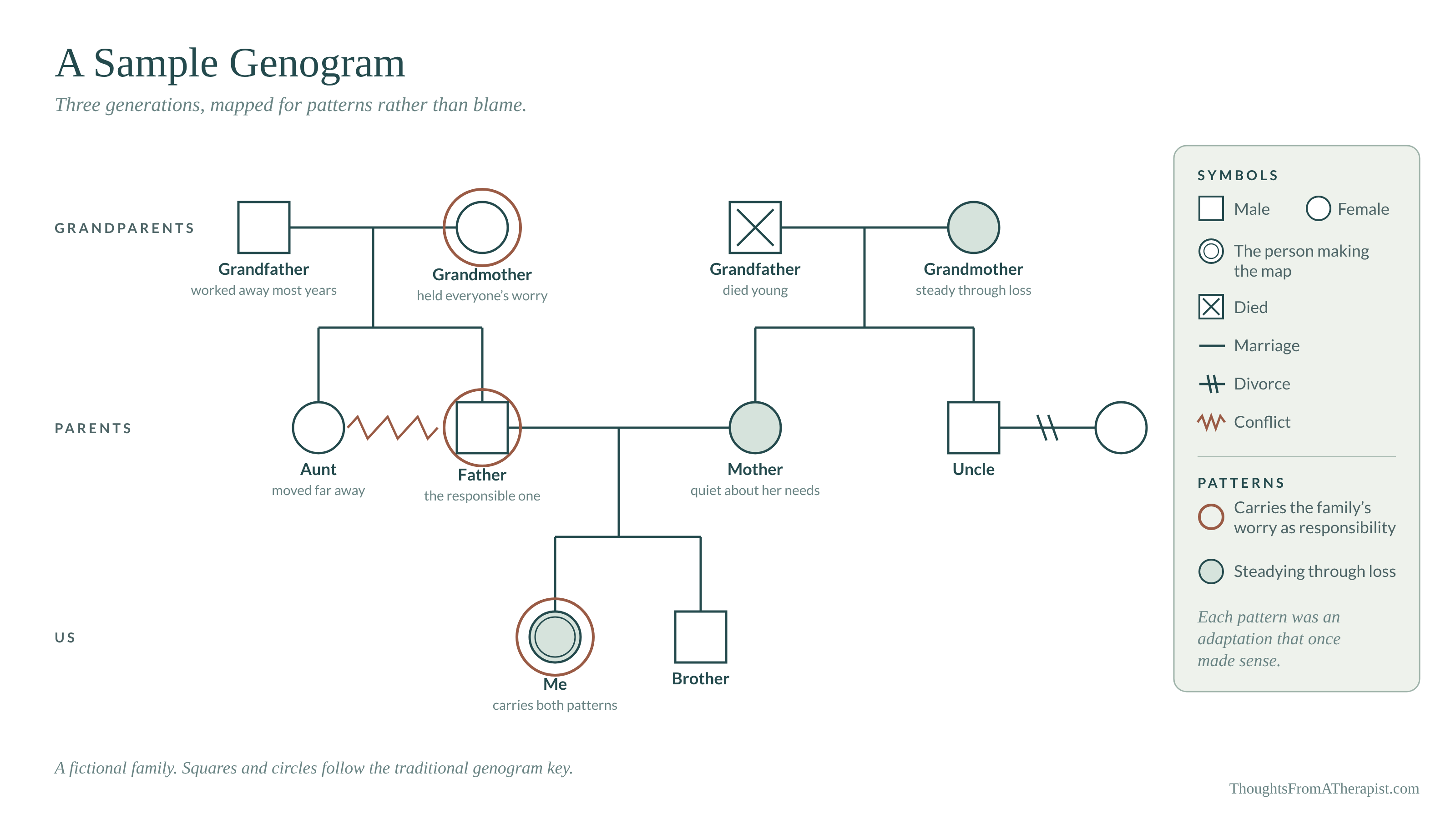
A fictional three-generation family mapped for patterns rather than blame, with the standard genogram symbols.
04 Self-Awareness, Self-Worth & Integrity
15 worksheets and diagrams · Read the Self-Awareness, Self-Worth & Integrity guide
Values and Integrity WorksheetAm I Living by What I Value?
Compare a week of what we do with what we say matters.
Guilt vs Shame WorksheetGuilt for Harm or Guilt for Being Yourself
Sort guilt for harm from guilt for being who we are, and respond to each.
Externalizing the Problem WorksheetLoosening Self-Labels
Rewrite self-labels so the problem is something we live with, not who we are.
Why Do I Keep Doing This? Understanding a Pattern Without Judgment
Look at a repeating behavior with curiosity: where it came from and what it once protected.
Who Am I in Different Settings? Identity and Family Roles Worksheet
How we show up in different settings, and which self we want to present.
Dialectical Thinking WorksheetHolding Two Truths
Rewrite an either/or as a both/and, and decide what to do with the tension.
Building Discipline WorksheetTen-Second Habits and Kept Promises
Ten-second habits, kept promises, and removing a choice we keep reopening.
Mental Health Self-InventoryThe Fractal Field Across Seven Dimensions
A reflection across the seven dimensions of the Fractal Field: where we are coherent, where we tighten, and with whom.
Emotional Intelligence Self-AssessmentToo Little, Too Much, or Balanced
Twenty-four capacities marked in two contexts: where we are balanced and where we drift.

The Fractal Field of Mental Health
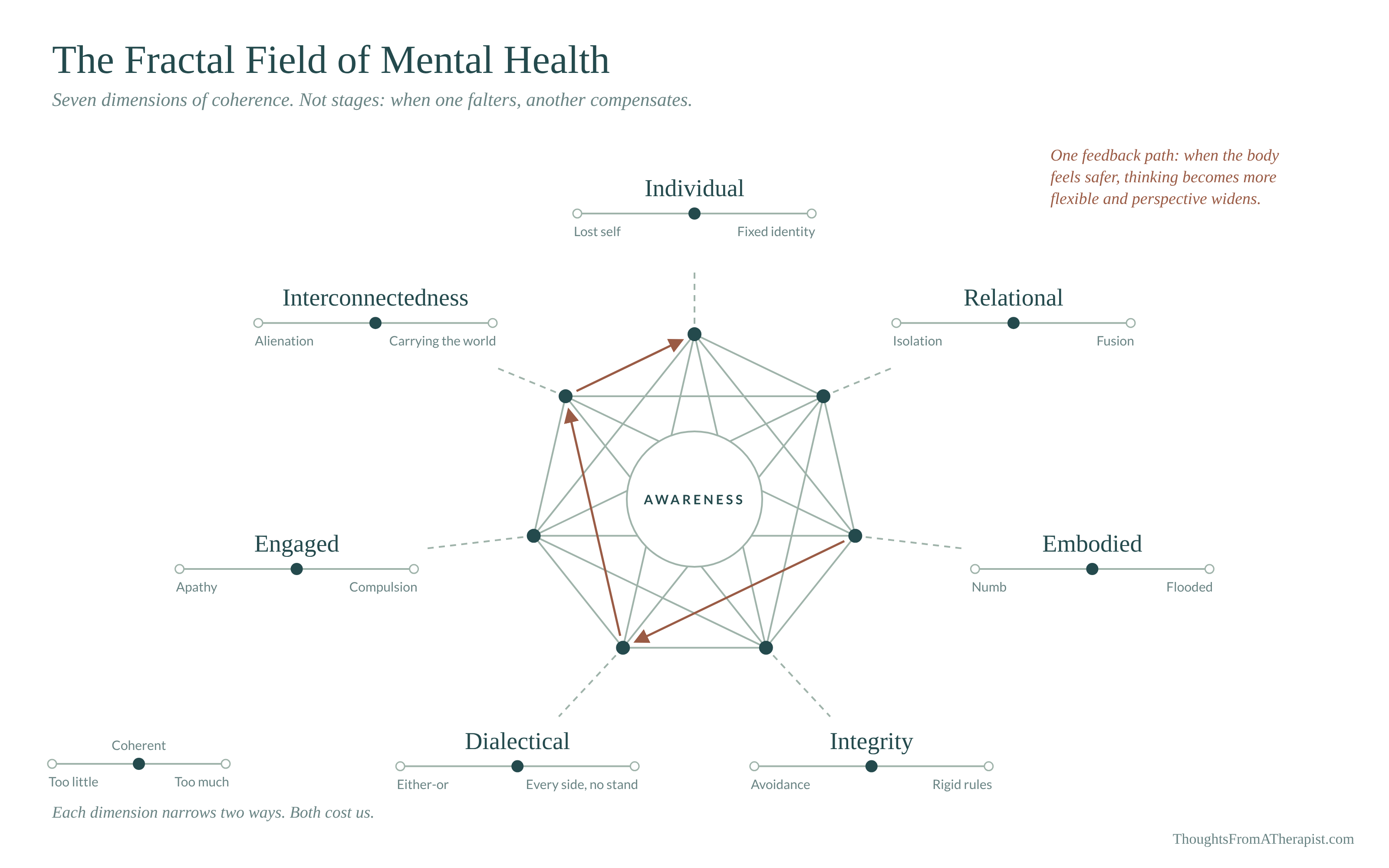
Seven dimensions of coherence: individual, relational, embodied, integrity, dialectical, engaged, and interconnected.

Emotional and Social IntelligenceA Living Balance
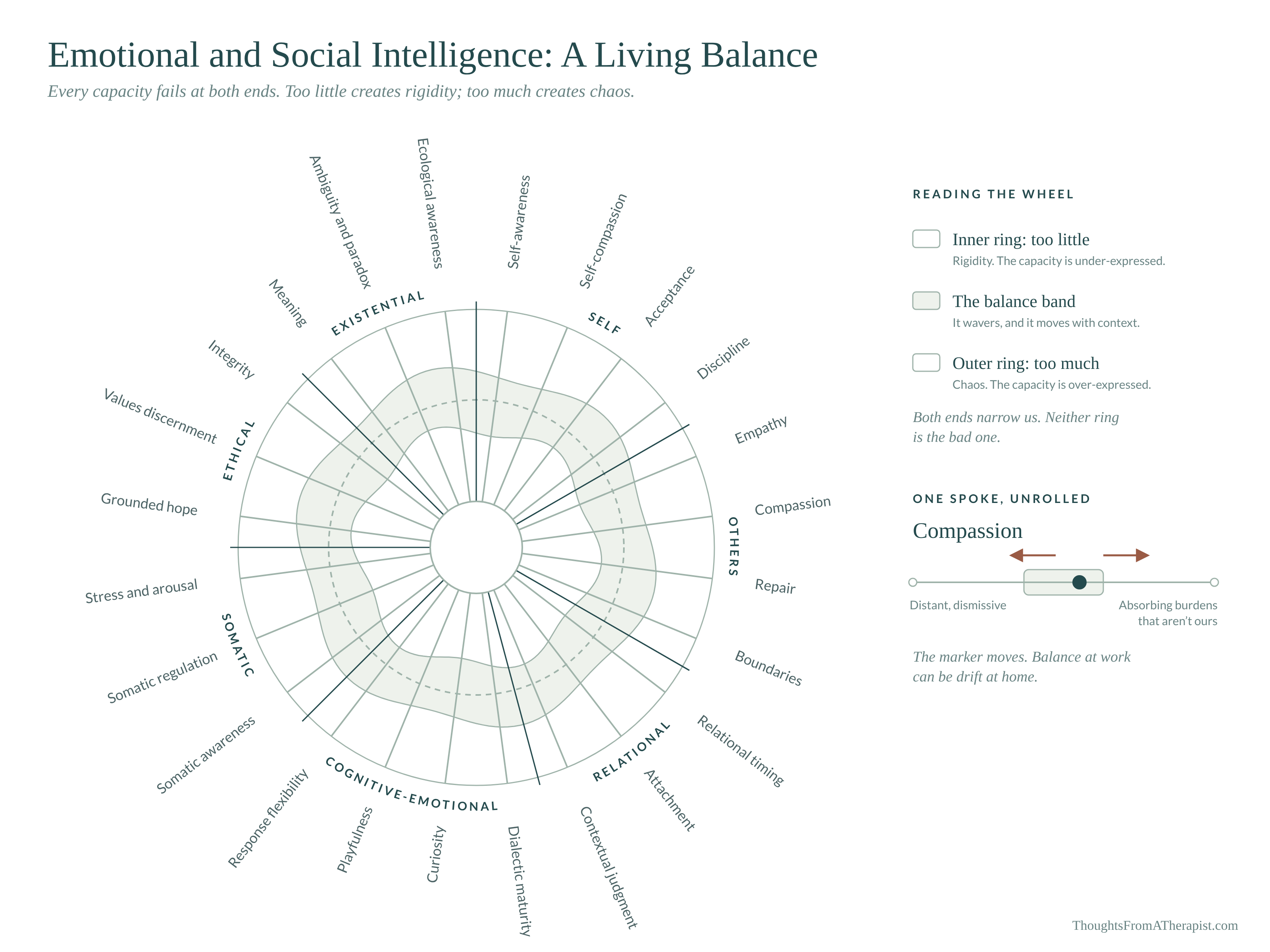
Every capacity fails at both ends. Too little creates rigidity, too much creates chaos.

People-Pleasing and IntegrityThe Three Fears
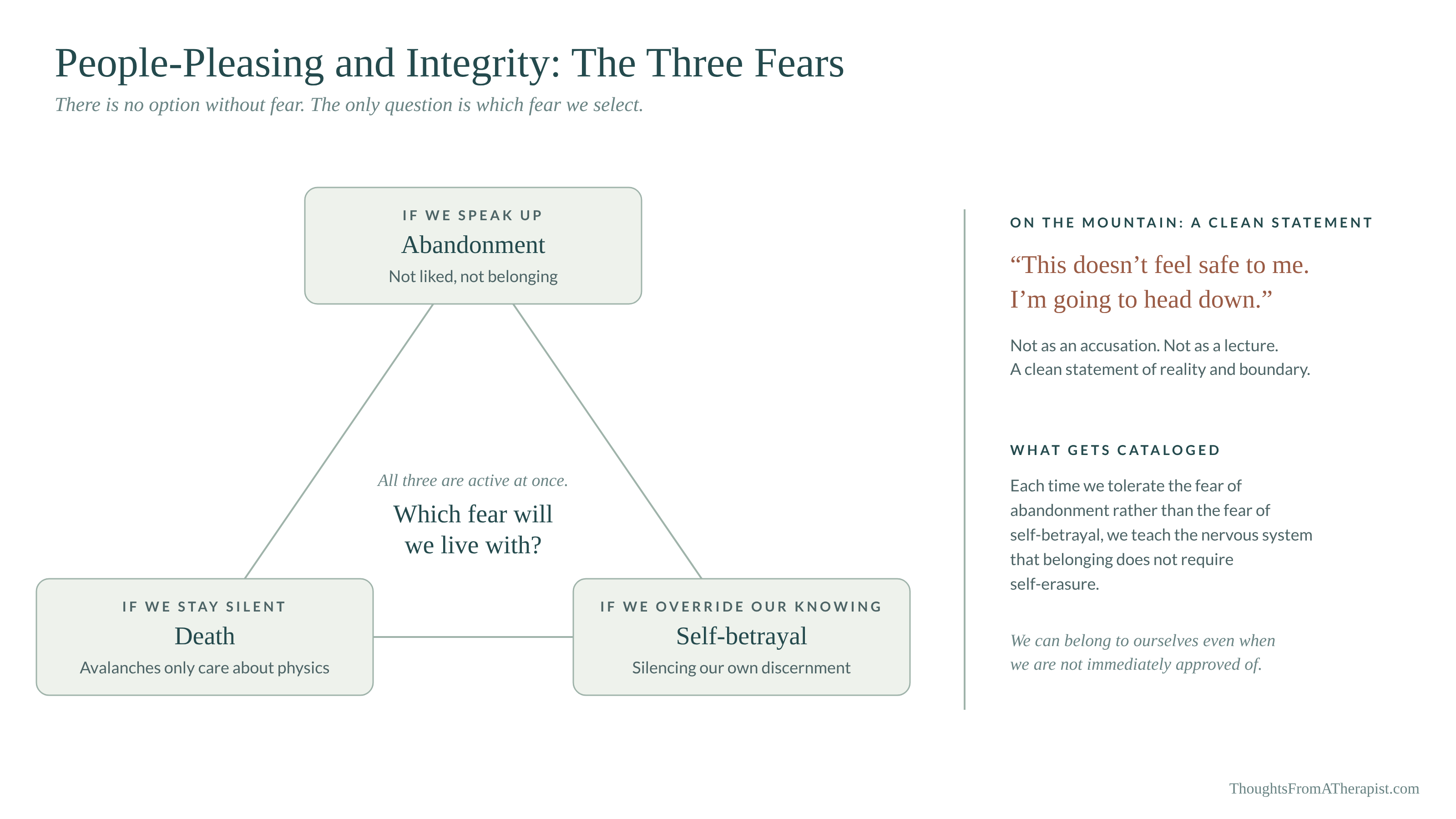
Abandonment, death, and self-betrayal: which fear will we live with?

Rigid IdentityFour Self-Sealing Loops
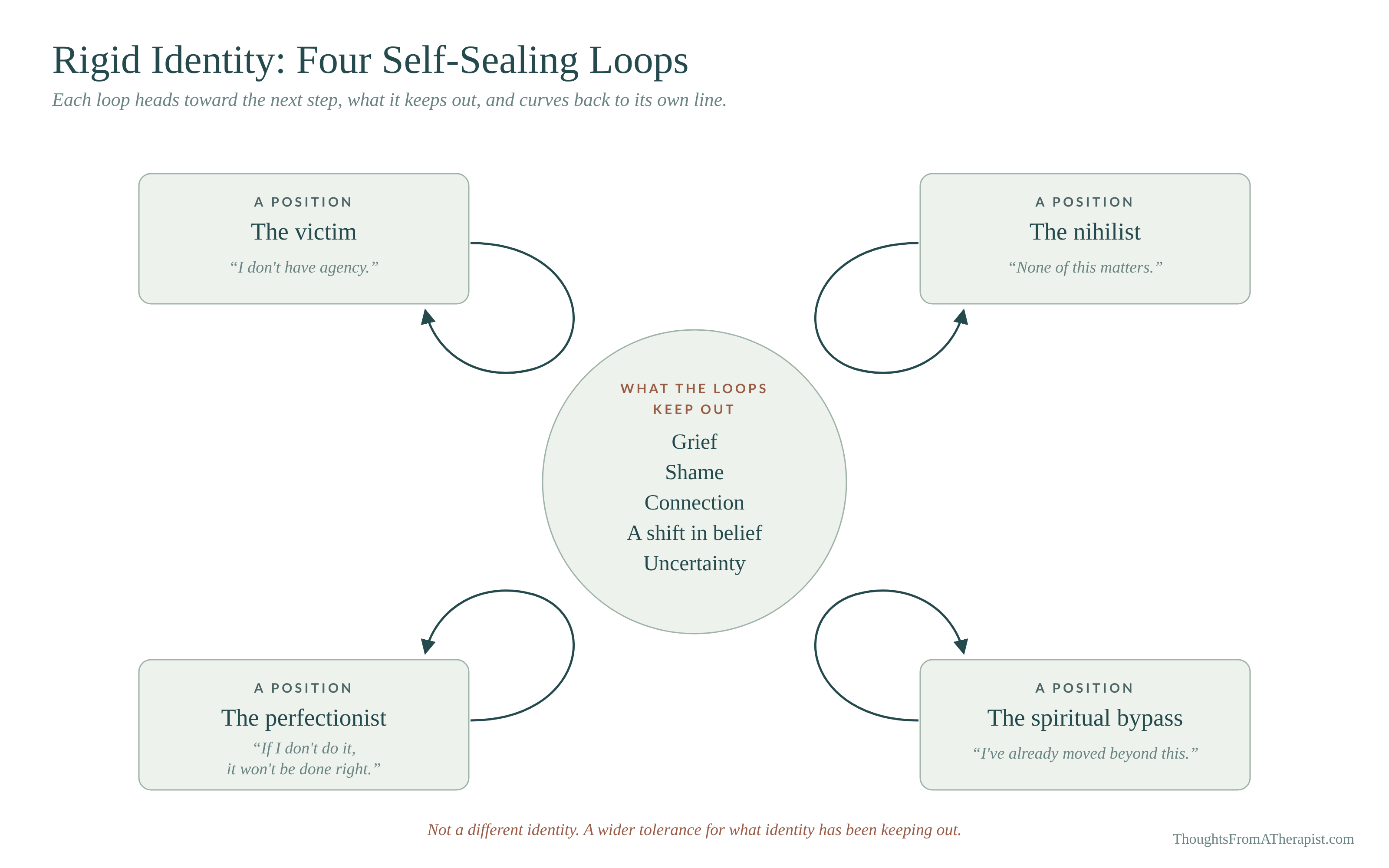
Victim, nihilist, perfectionist, and spiritual bypass: four loops and what they keep out.

Strength Is ContextualHypo- and Hyper-Empowerment
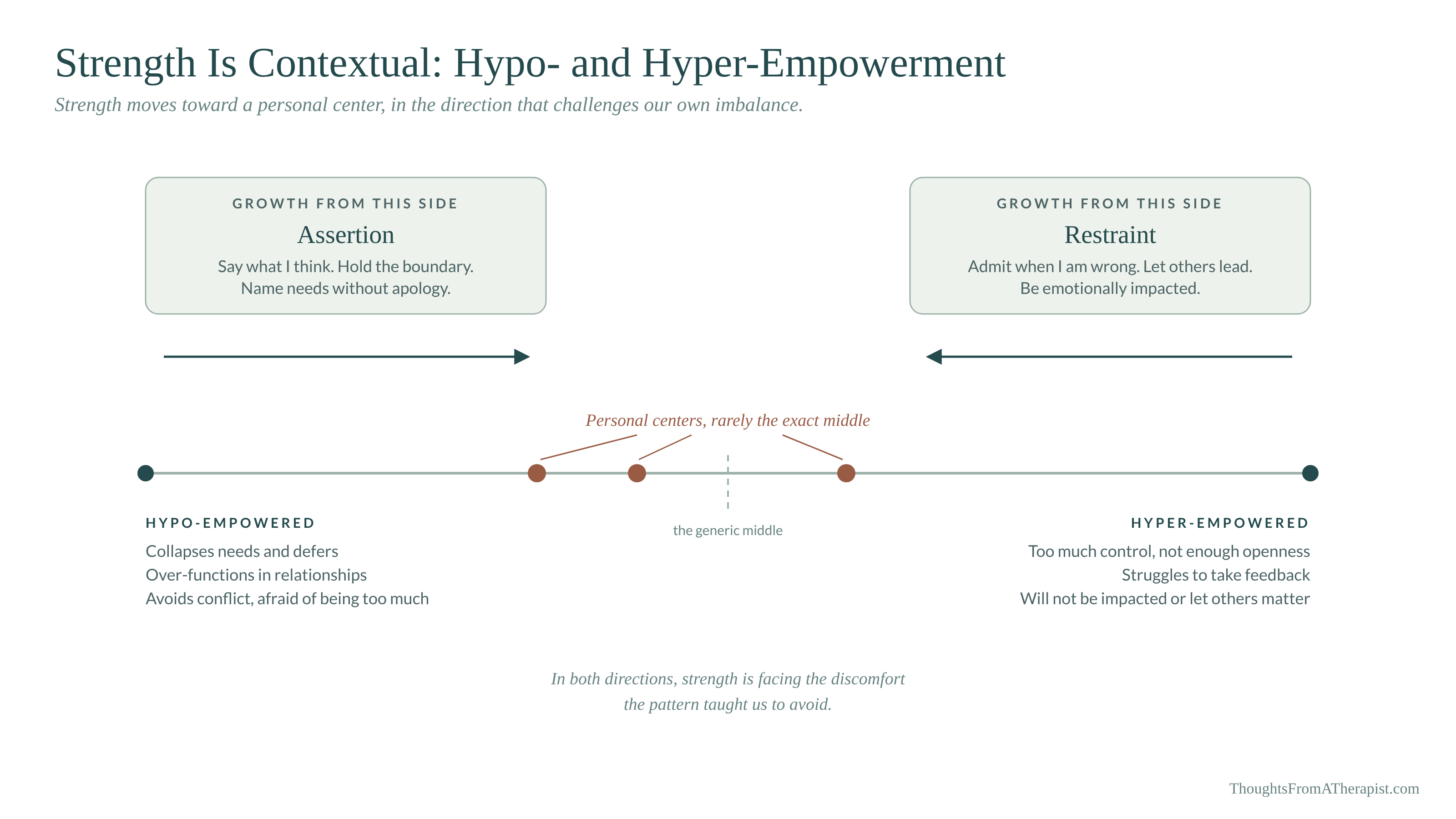
Strength moves toward a personal center, through assertion or through restraint.

Dichotomy vs DialecticEither/Or and Both/And
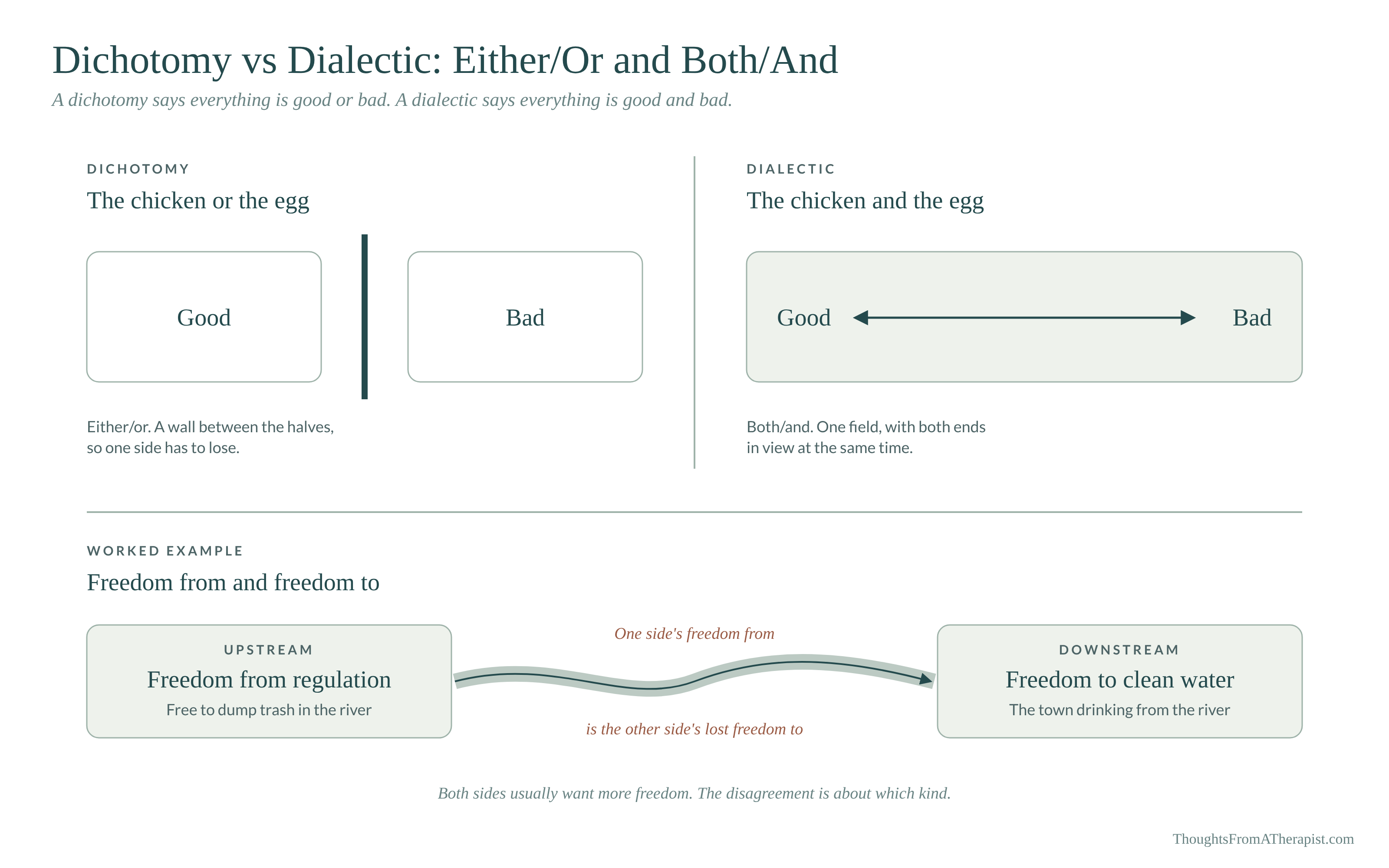
Either/or thinking against both/and, with freedom from and freedom to.
05 Fulfillment, Meaning & Philosophy
3 worksheets and diagrams · Read the Fulfillment, Meaning & Philosophy guide
Why Am I Disappointed When Things Are Good? Expectations Worksheet
Expected against actual, and whether the shortfall deserves the attention it takes.

Why Good Experiences Can Feel Disappointing
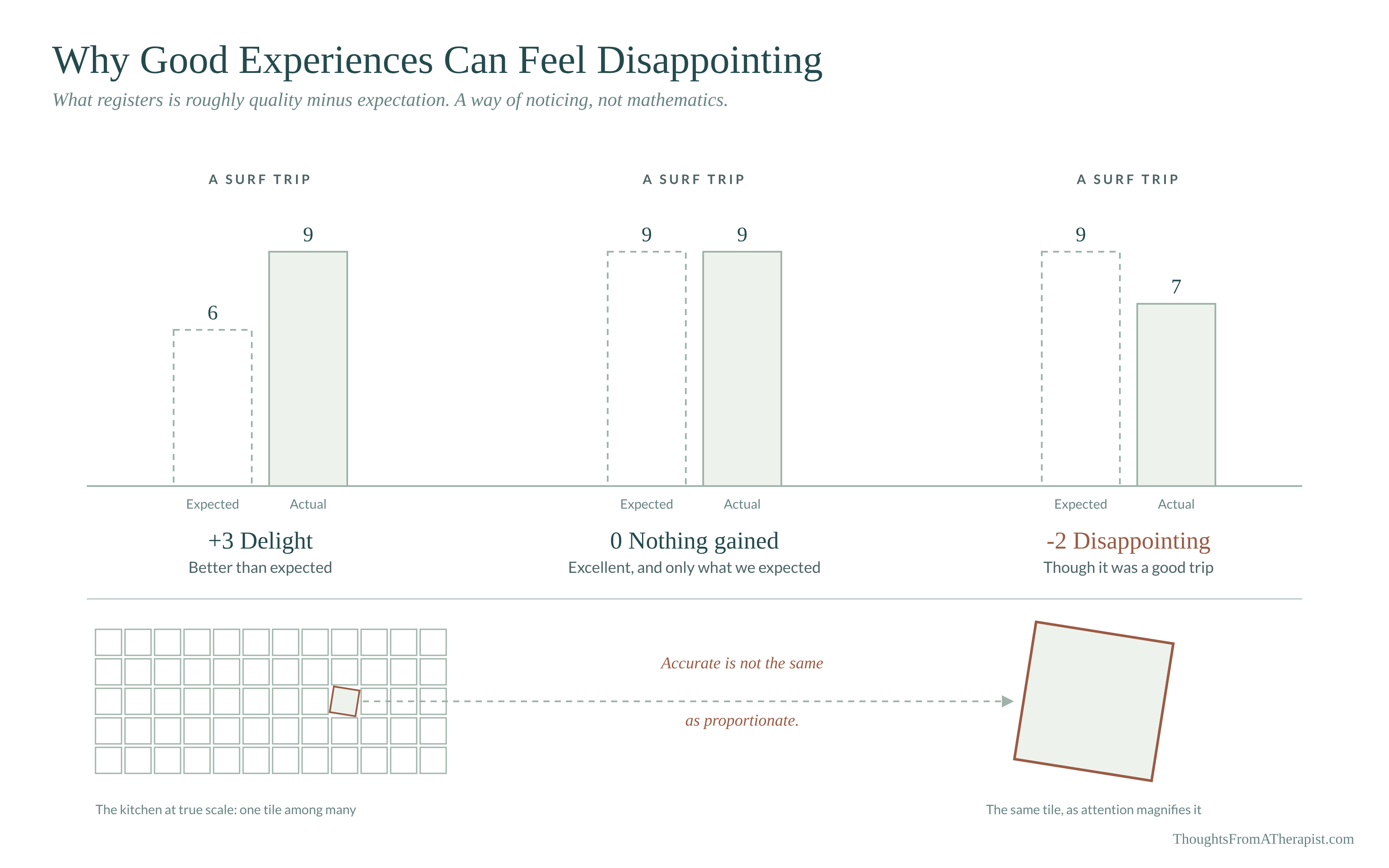
What registers is roughly quality minus expectation. A way of noticing, not math.

Intentionality and HappinessLiving by Plan or in the Moment
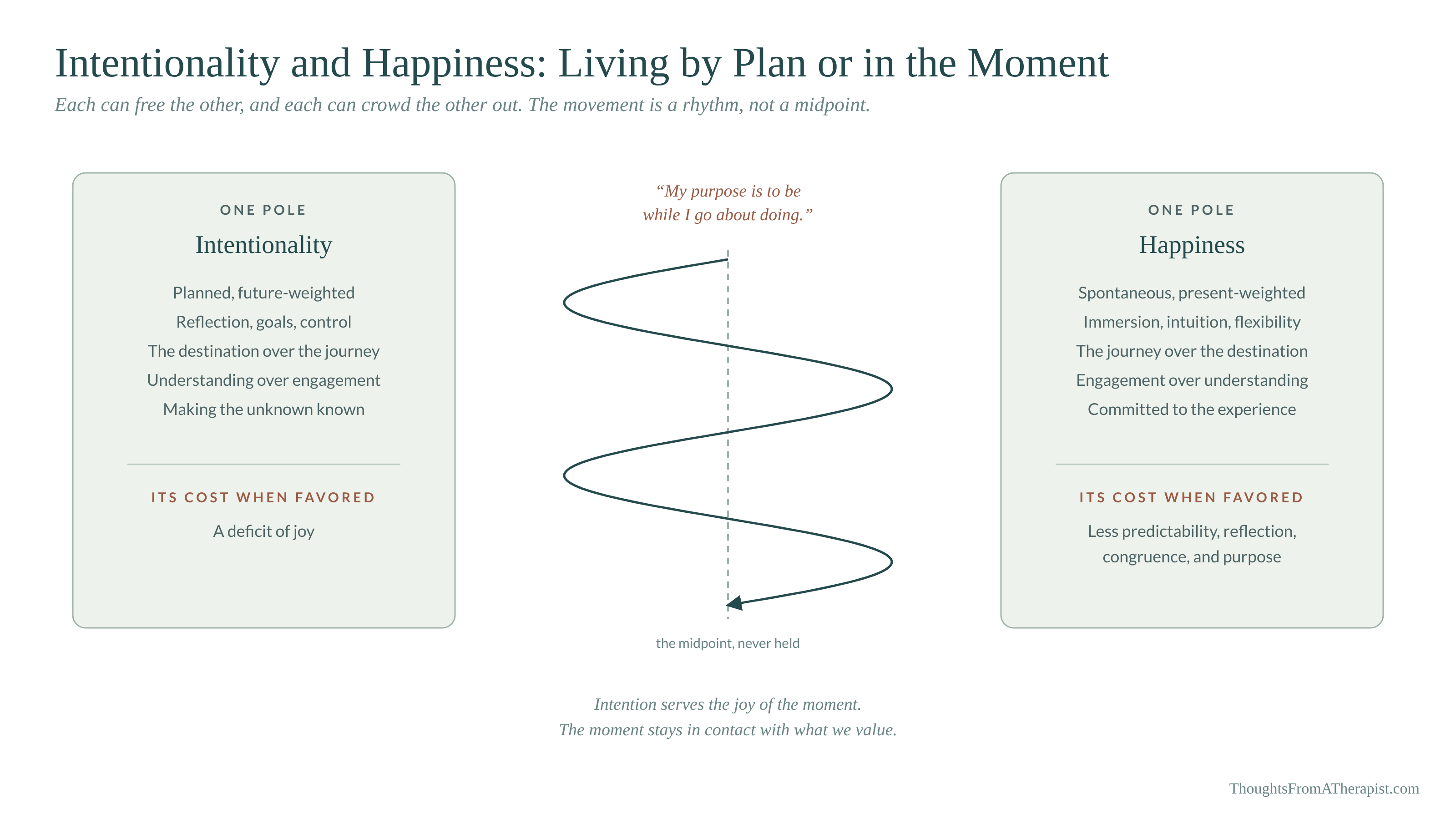
Planning and presence can crowd each other out. The movement is a rhythm, not a midpoint.
06 Spirituality, Creativity & the Present Moment
3 worksheets and diagrams · Read the Spirituality, Creativity & the Present Moment guide
How to Stop Ruminating WorksheetRadio Log and Returns Tracker
Log what the radio said, how long we followed it, and every return.

Meditation Is the Practice of Returning
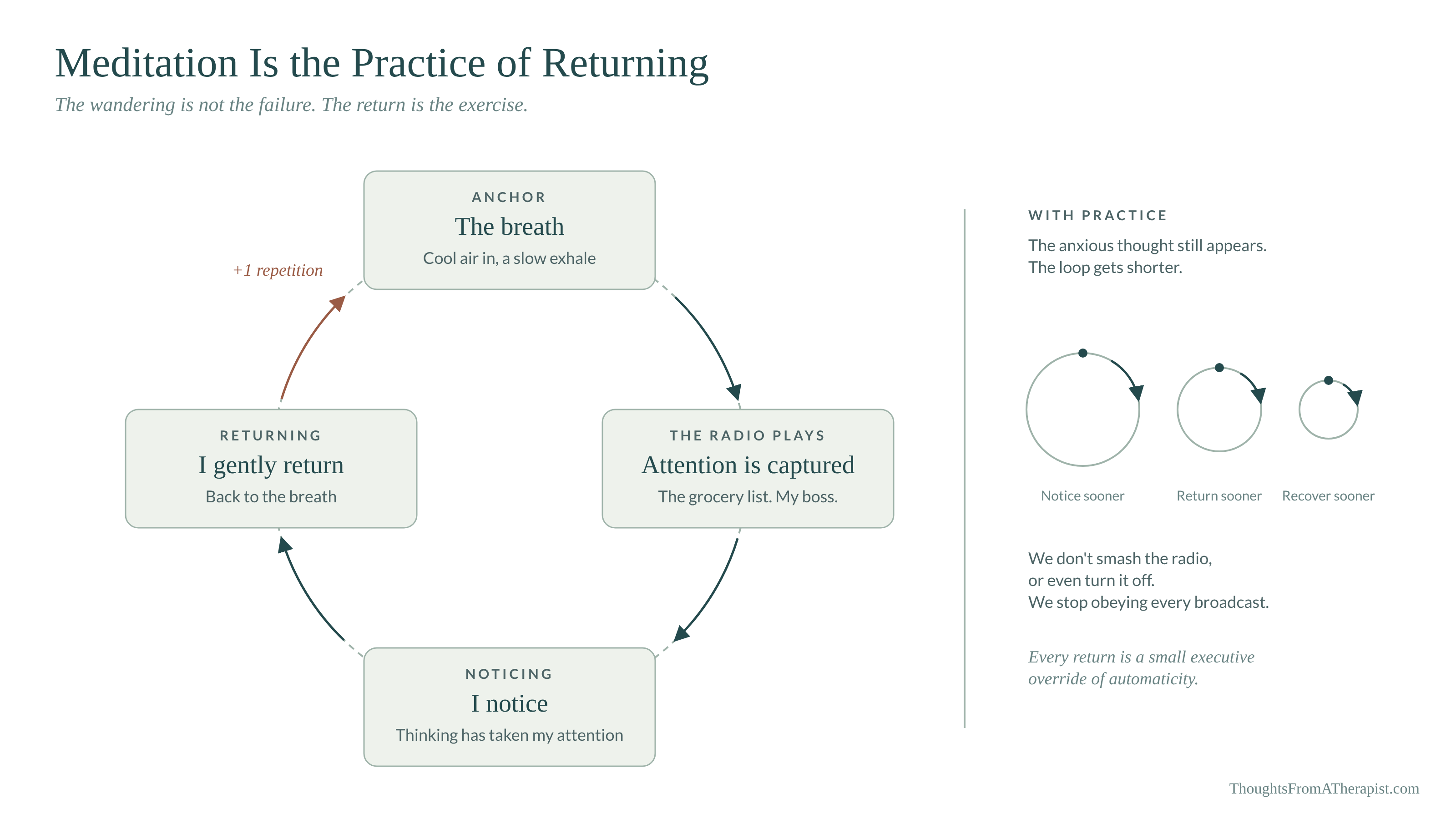
Breath, the radio plays, we notice, we return. The return is the exercise.

Analysis vs Observation
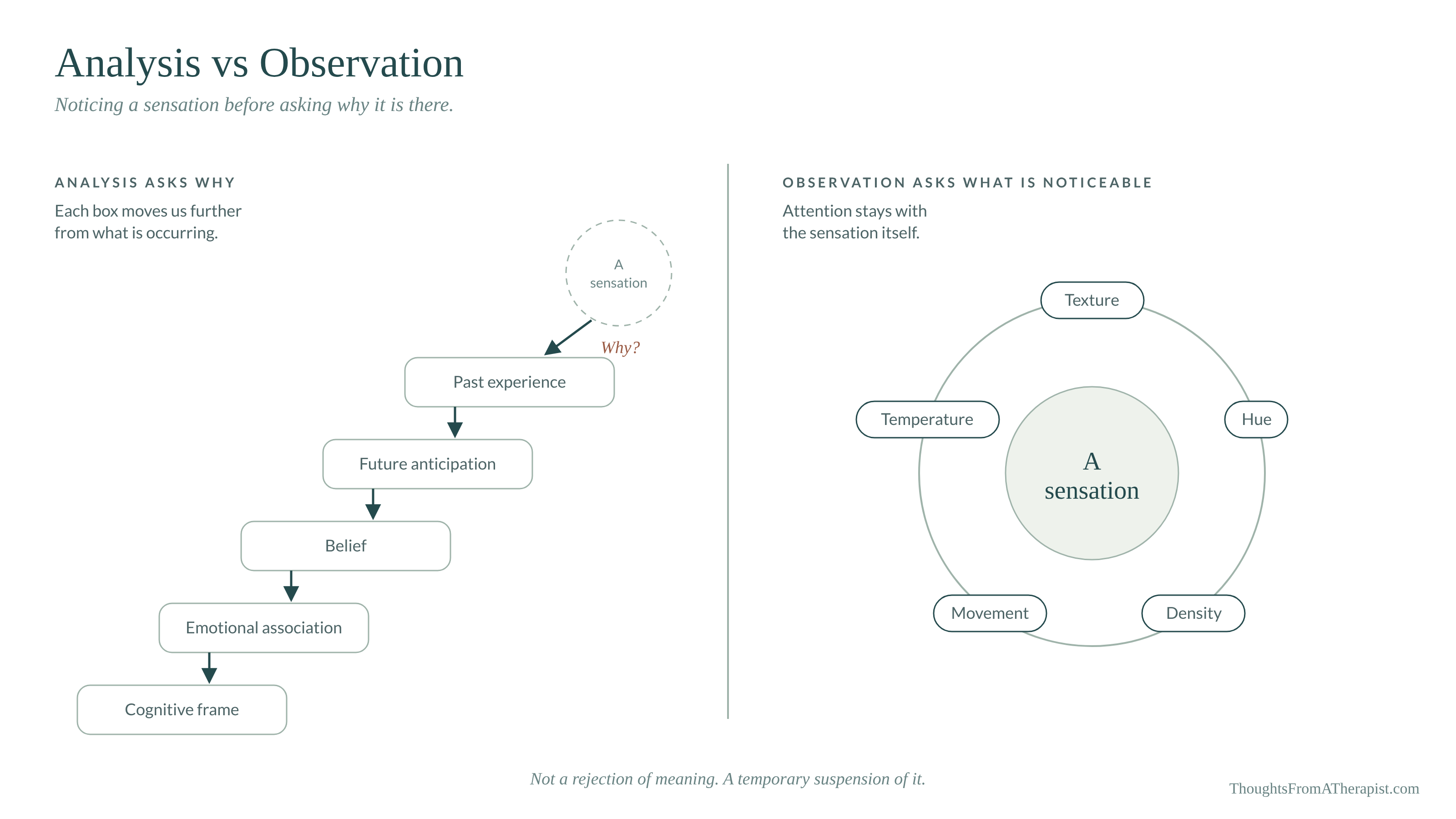
Noticing a sensation before asking why it is there.
07 Culture, Politics & Shared Problems
5 worksheets and diagrams · Read the Culture, Politics & Shared Problems guide
How to Form Your Own Political Positions Worksheet
Seven domains, five questions, and how we weigh our own values.
How to Spot Manipulation in News and Political Ads Worksheet
Regulate first, then check the claim, the pathway, and whether it is a sign or a menu.
How to Solve a Personal Problem WorksheetDialectic and Deconstruction (DDS)
Trace a personal problem upstream, hold the tension, and design the part we can carry.

How Dialectic and Deconstruction Solutions Works
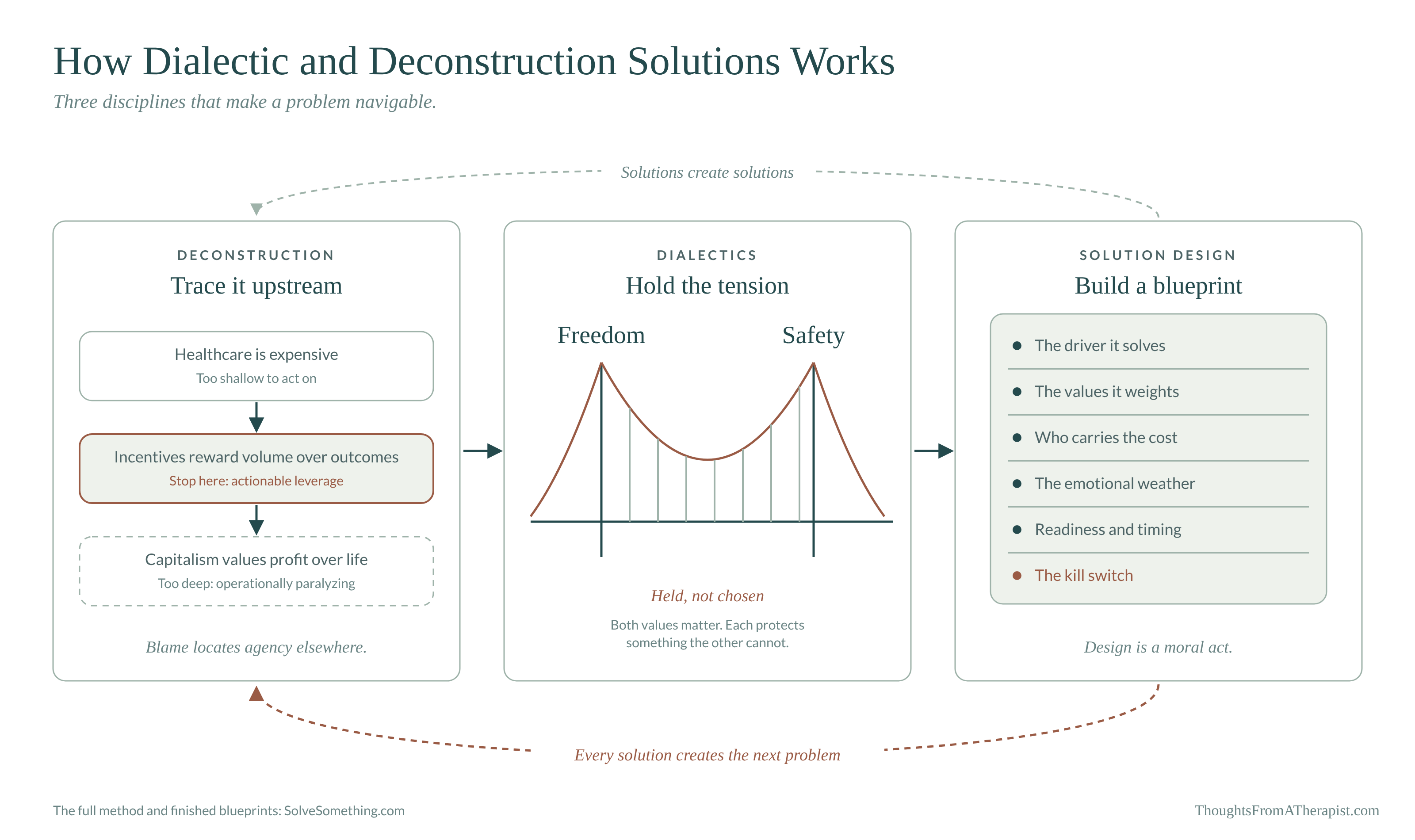
Deconstruction, dialectics, and solution design: three disciplines that make a problem navigable.

Liberal and Conservative as Strategies
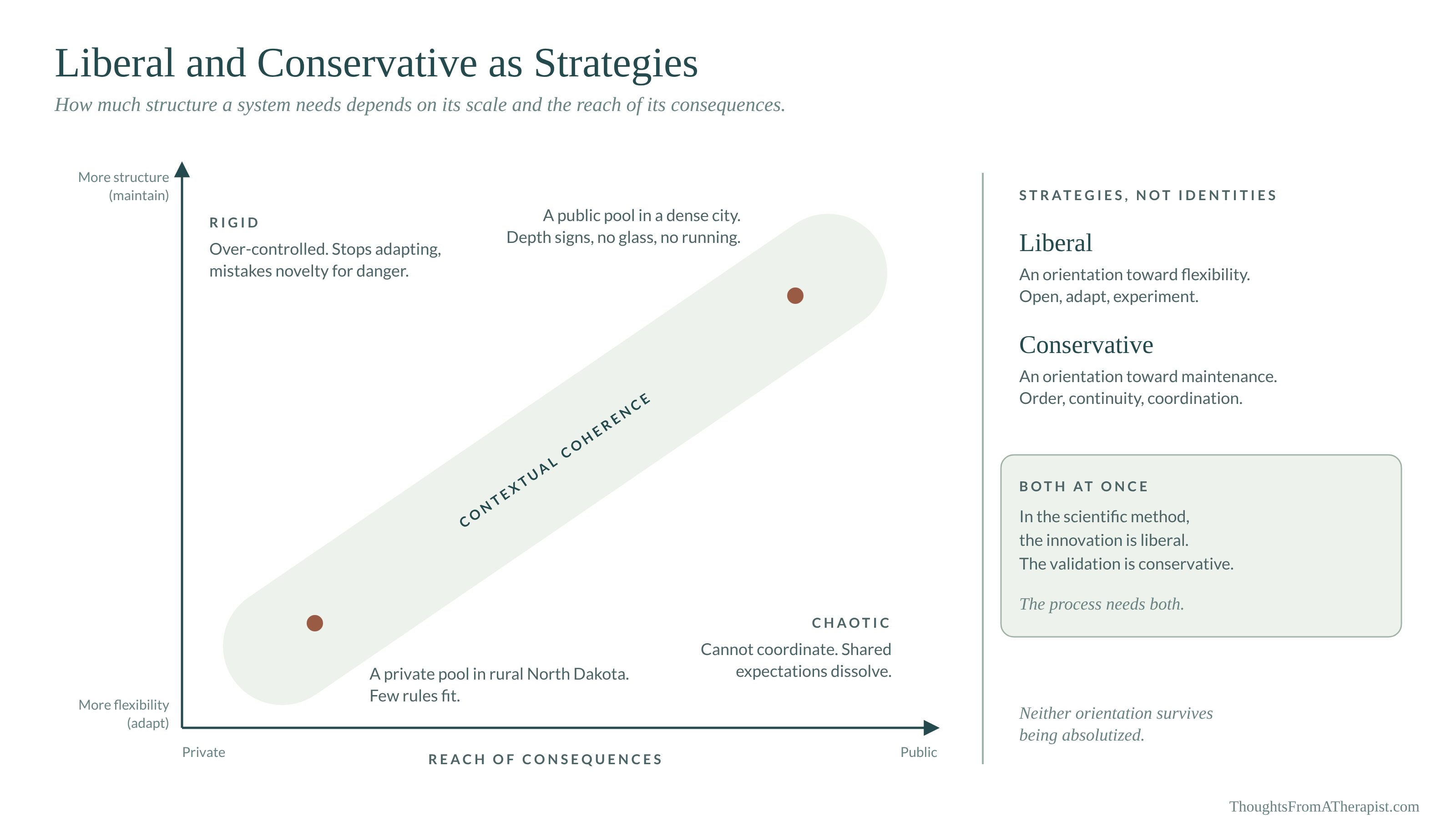
Liberal and conservative as strategies for how much structure a system needs.
08 How Therapy Works
5 worksheets and diagrams · Read the How Therapy Works guide
Getting the Most Out of Therapy WorksheetFit, Feedback, and What I Need Today
Comfort or growth today, fit, feedback, and what to ask for in therapy.

Types of Therapy ExplainedWhere Each Approach Enters
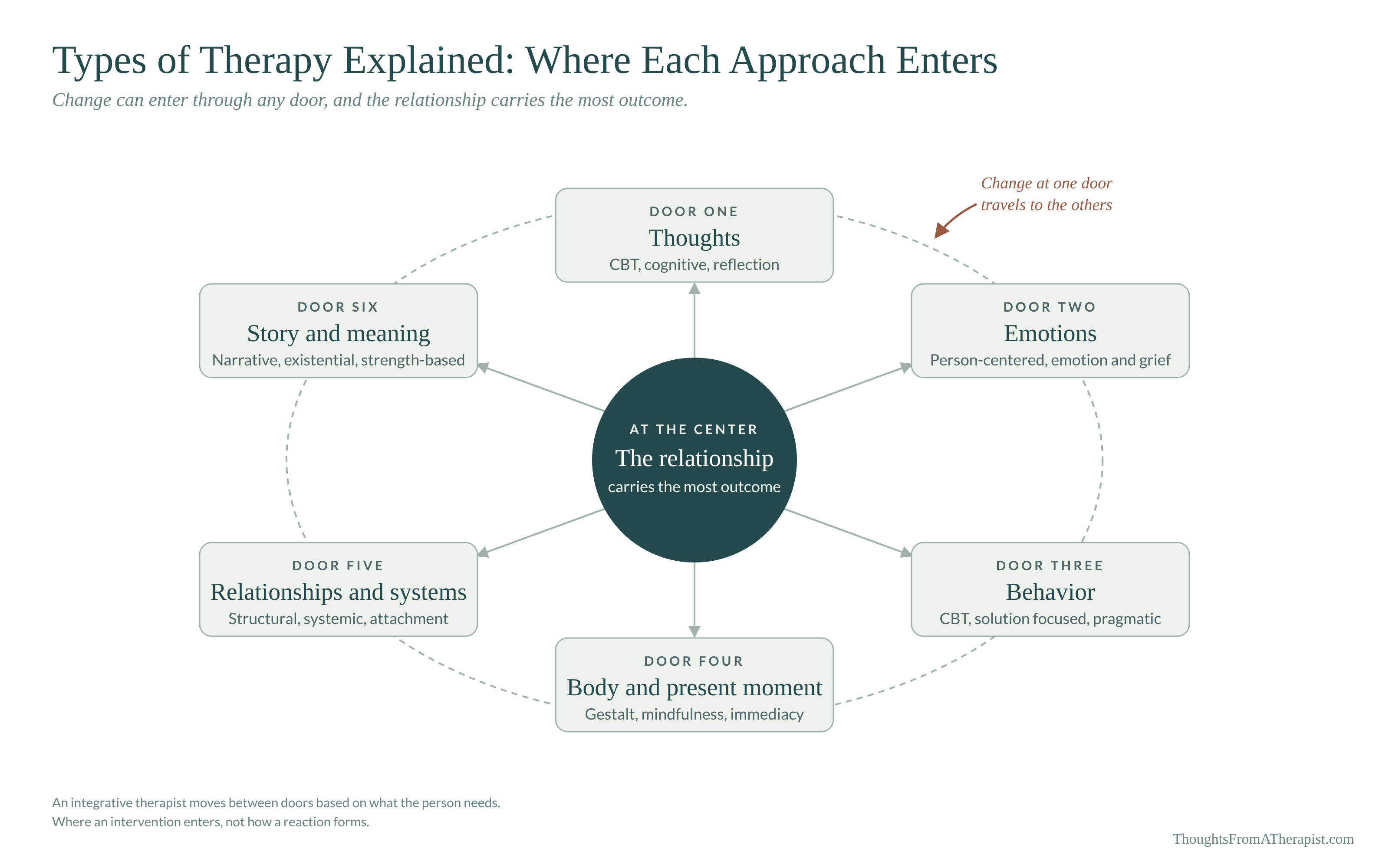
Where each approach to therapy enters, and why the relationship carries the most outcome.
For clinicians and supervisees
Self of the Therapist Reflection WorksheetWhat I Bring Into the Room
For clinicians and supervisees: what we bring into the room, from family role to blind spots.
Immediacy in Therapy Practice Log for Therapists
For clinicians and supervisees: a log for practicing immediacy in session.
Self of the Therapist InventoryClinical Capacity Drift Check
For clinicians and supervisees: forty-seven capacities on an ordinary day and on the hardest one.
Filling in on screen. The worksheets work in Adobe Acrobat and Reader, Chrome, Edge, Firefox, and Mac Preview. Type on the lines, click the boxes, and click a dot or type a letter where the sheet asks for a mark. Save the file to keep the answers. In Google Drive, open it in the PDF viewer. Opening it with Google Docs removes the fill-in fields.
Printing. Every worksheet prints on letter paper exactly as it looks on screen.
These tools are for reflection and conversation. They do not diagnose anything, and they are not a substitute for therapy.