Control can be a useful adaptation to anxiety, responsibility, and parenthood. Eventually, the thing that made life manageable can also make it smaller.
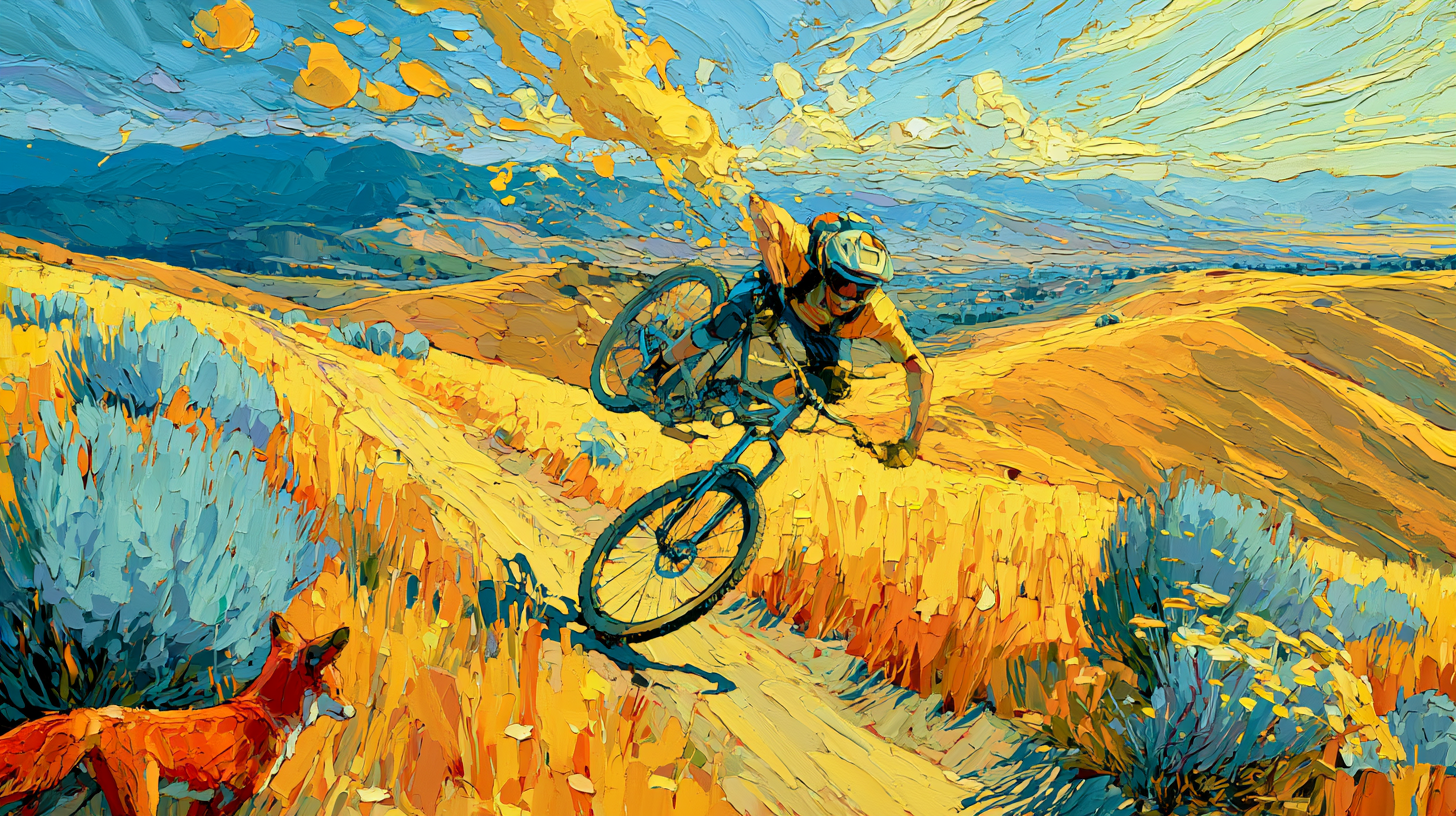
I fell off my mountain bike today. Not a little fall, either. I went over the handlebars, scraped up my knee, hit my head, tweaked my neck, and lay there for a moment while my nervous system flooded me with all the neurochemicals designed to keep a mammal alive.
And, strangely, I think falling was good for me. Not because I learned to be more careful. I think I needed to learn almost exactly the opposite.
I Have Become More Controlling
Here is an uncomfortable thing I have realized about myself: in the roughly fourteen years I have been a father, I have probably become more controlling with each consecutive year. This evolution has made me reflect on how Parenting Made Me More Controlling.
I should clarify what I mean, because I do not think I am an especially controlling parent. That is part of the paradox. My education as a psychotherapist has made me conscious of child development and the need for parents to evolve alongside their children. The parent a two-year-old needs is not the parent a fourteen-year-old needs. So I have worked deliberately at loosening control as my children have become increasingly capable of running their own lives.
Internally, though, I kept getting better at control.
And there is a reasonable explanation for how that happened. When our children are very young, being controlling is part of the job description. A two-year-old is a magnificent little creature with almost no understanding of mortality. They cannot swim, but they would be delighted to jump into the water. They will escape our hands and run toward the road. They will wander toward rivers and oceans. They are curious about the world and apparently believe putting pieces of it into their mouths is an excellent method of scientific inquiry. Some things in life only need to go wrong once.
Reflecting on my journey, I realize that Parenting Made Me More Controlling in ways I never anticipated.
So parents become vigilant. Where is the kid? Where is the water? Where are the cars? What is in their mouth? Why is it so quiet? We begin managing the environment because someone we love does not yet possess the developmental capacity to manage it themselves.
Control becomes an expression of care. And it works.
When Control Works
There was another reason control became useful in our family. My wife, Franziska, and I were good at creating structure.
I do not mean that our lives were immaculate or that we discovered some secret method of parenting everyone else missed. We struggled and adapted like everyone else. We got some things wrong. We also got lucky; we have wonderful kids.
But there is one thing I think we did unusually well. We worked as a team to preserve the parts of our lives that tend to disappear when children are young. We protected the development of our children. We protected our marriage, our friendship, and our romance. We made room for our individual selves. We maintained careers. We exercised. I never stopped playing music. We created space for rest and recovery when we could.
In contemporary American life, that is hard. There are not enough structural supports for young families, and there are not enough hours in the day to satisfy the demands placed on parents. So we created the space ourselves. And the way we did that was, in part, by being controlling. Schedules, systems, communication, planning, consistency, clear expectations, a division of responsibilities. Structure.
These words are relative, of course. Structure feels controlling compared with chaos, and chaos can feel liberating compared with structure. But whatever word we use, we managed a lot of variables. And it worked.
That matters. We often talk about psychological adaptations as though they are defects to correct. Most adaptations exist because, at some point, they were useful. The trouble begins when the environment changes and the adaptation does not.
Apparently I Would Rather Fly the Plane
I discovered this recently while thinking about my anxiety around flying. Somewhere along the way, I developed flight anxiety. I can now experience something approaching panic while sitting on an airplane. There are other reasons for this. I have been through a few sketchy landings, and there are experiences in my history that contribute to my nervous system’s response.
But while reflecting on it, I realized something embarrassingly funny. I think I would feel less anxious if I were flying the plane.
There is one small problem with this. I do not know how to fly a fucking plane.
This was humbling. Apparently some part of my nervous system would prefer that I personally operate an aircraft I am unqualified to fly rather than surrender control to the trained professionals in the cockpit. That is when I had to acknowledge it. Maybe I have become a little controlling.
Gripping the Handlebars Too Tight
Which brings me back to my mountain bike.
Biking has not been as fun for me this year. This is unfortunate, because I have a new bike, and it kicks ass. I am generally a used-equipment person, so a nice full-suspension mountain bike felt like a treasure. Yet something has been off, and recently I figured out at least part of it. I am literally gripping the handlebars too tightly.
Descending rough terrain, gripping the shit out of the handlebars does not make me safer. It makes my hands hurt. It makes my forearms hurt. It makes my body rigid. Then I arrive at the banked turn at the bottom of the washboard with my entire upper body braced against the machine that is designed to move underneath me.
The riders in this town who are far better than me do something different. They are loose. Not careless, and not disengaged. They are holding onto the bike. But there is fluidity. They allow the suspension to absorb the terrain. They allow the bike to move beneath them. Their bodies adapt continuously to what is happening rather than attempting to overpower it. Paradoxically, accepting some risk makes them safer. It also makes riding more fun.
I know this feeling from skiing. I used to telemark, and when everything clicked, there was a point where I stopped forcing the turns. I was still directing the skis, but I was also allowing them to move. Music works this way too. We can hear when someone is forcing a scale. The notes may be correct, but the body is tight, and the rigidity makes its way into the sound.
There is a difference between controlling something and being in relationship with it. I think I had forgotten some of that.
Bob Marley
I almost never listen to music while mountain biking. Partly this is control, but that is not entirely fair. There are legitimate reasons. It is safer to hear what is happening around us. Music can also pull me into daydreaming, and one of the things I love about biking is that it pulls me into the present. I have to inhabit my body and respond to the trail. So not listening to music is a perfectly reasonable decision.
Today, I decided not to make the perfectly reasonable decision. At the top of the trail, before starting the descent, I put on Bob Marley.
Something changed immediately. I started having more fun. Years ago, I used to listen to Bob Marley while telemarking through moguls. Something about the rhythm helped me loosen. Instead of attacking the mountain, I could move with it.
And riding today, I remembered my friend Benjamin Rachelson. Benjamin was my best friend during an earlier period of my life, around college and the years that followed. Thinking about him brought me into contact with an earlier version of myself. We had a lot of experiences of fluidity together, and that was long before I became so controlling.
I was riding faster now. Looser. Having fun.
Then I saw the fox.
Pay Attention
I live in Steamboat Springs, Colorado. Seeing a fox here is not unusual. But I have a peculiar relationship with foxes. Throughout my life, there have been moments when a fox has appeared and something about the encounter has pulled me abruptly into presence. I do not need to make a supernatural claim about this. Maybe the fox means nothing. But somewhere along the way, seeing one became an internal cue: pay attention. There is something here. Be curious.
This was one of those times, so I paid attention. At first I thought the message was obvious. Hey man, you are allowed to listen to music sometimes. Maybe everything does not have to be optimized for safety. Maybe Bob Marley and mountain biking are allowed to coexist. Maybe loosen the fuck up a little.
Fair enough. I kept riding.
Apparently, the fox had more to say.
Then I Fell
Near the bottom, I got onto a section of trail called NPR. I sometimes avoid it this late in the summer because it gets dry and washboarded and does not ride well. But today I was cruising. I was going fast, and I had already had a couple of moments when I thought: ooh, I took that a little fast.
Then it happened. I started losing it. I tried to regain control instead of immediately bailing, which anyone who bikes or skis knows can make the eventual fall worse. I went over the handlebars. Hard.
I scraped up my knee. I hit my head. I tweaked my neck. For a moment I had to stay there. Adrenaline is strange. The body floods itself with chemicals whose primary concern is not an accurate medical assessment. So I waited. I moved things. Checked things. I let my system settle enough to determine whether I was actually okay or merely experiencing the temporary biochemical conviction that I was okay.
I was okay. Banged up, bleeding a little, shaken, but okay.
And then something stranger happened. I was glad I had fallen.
The Lesson Was Not to Grip Tighter
This is where the experience became interesting to me. The obvious lesson from falling off a mountain bike is: see? Be more careful. Turn the music off. Slow down. Grip the handlebars tighter. Control more variables. My nervous system knows that lesson well.
But lying there on the trail, that was not what I felt. What I felt was: that was not that bad. I fell. It hurt. For a few moments I did not know whether I was okay, and then I was. I was alive, and I was in my body. Somehow experiencing the thing I had been trying to prevent made the possibility of it less frightening.
This is one of the strange paradoxes of anxiety. Control can be an adaptation to anxiety, and eventually control can become one of the things that perpetuates it. The more thoroughly we organize our lives around avoiding discomfort, uncertainty, embarrassment, injury, rejection, failure, grief, or fear, the fewer opportunities we have to discover something important: we can experience difficult things and remain okay.
Not always, of course. Some consequences are catastrophic. Some risks are stupid. Some injuries permanently change lives. This is not an argument for recklessness. It is an argument for remembering that safety is not the only human value.
Parenting Eventually Requires the Opposite Skill
Perhaps this is why the experience landed the way it did.
Parenthood begins with control. It has to. A two-year-old running toward traffic does not need a philosophical conversation about autonomy. They need us to grab them. But parenting gradually requires us to surrender exactly the control we spent years learning to exercise. The task reverses itself. At first, good parenting requires intervention. Eventually, good parenting requires tolerating non-intervention.
Our children have to experience uncertainty. They have to make decisions we would not make. They have to fail, get hurt, and encounter consequences. They have to discover what their own bodies, minds, relationships, and values can withstand. And we have to tolerate watching.
That may be one of the harder developmental transitions of parenthood, because control and care have grown intertwined. Relinquishing control can feel disturbingly similar to relinquishing care. But they are not the same thing. Perhaps the work is learning how to remain engaged without needing to manage every variable.
The Cumulative Weight of Control
I want to be careful with the word controlling, because it can evoke something more external than what I am describing. I am not walking around micromanaging people. I am not telling everyone how to do their jobs or becoming enraged when the waiter brings the wrong side dish.
It is also not risk aversion, at least not the obvious kind. I still jump off cliffs skiing with my teenager. I have taken my kids into rather large surf with floaties on. I generally do not hire a guide, and I will do most things anyway. I will figure out the route on the kayak up the river. I bought a used whitewater kayak this year, and we went for it.
Most of my controlling happens internally. And almost none of it, taken individually, seems unreasonable.
I am always aware of our budget. I do not think I have ever paid a credit card late in my life. When I was young and wanted to buy a house, I made a complicated financial plan that eventually allowed me to do it. If we are going to the airport, I am aware of the variables that could cause us to miss the flight. Traffic. Parking. Security. How long it takes to get two kids moving in the same direction. I build those variables into the plan.
If we are on vacation and breakfast unexpectedly costs three times what I anticipated, I notice it. There is a little internal tightening – some combination of tension, grief, anxiety, and irritation. Even the fact that I had an anticipated price for breakfast says something.
I am also unusually aware of how environments function. I can walk into a large event and notice that the exits are designed poorly. I can look at a parking lot and immediately see the bottleneck everyone will encounter when the event ends. At Howelsen Hill here in Steamboat, I know that thousands of people eventually have to funnel back across essentially the same bridge. Some part of my brain is already living twenty minutes in the future, watching everyone try to leave. I can sit down at a restaurant, notice how the kitchen is functioning, and think: oh, we are going to be here for a while.
Again, none of this is necessarily a problem. Pay the credit cards. Make a budget. Leave enough time to catch the flight. Plan for retirement. Notice the surroundings. There are real consequences to the opposite disposition. Missing a flight with a two-year-old is miserable. Carrying $40,000 in credit card debt at 20 percent interest is its own chronic stress. Never anticipating consequences is not freedom. Sometimes it is poor planning.
So the lesson cannot be stop controlling things. That would be too easy, and mostly wrong.
The problem is cumulative. It is the subtle internal posture created by holding all of these variables, all of the time. The budget. The clock. The traffic. The exit. The parking lot. The credit card. The restaurant. The airport. The children. The future. Each individual act of awareness makes sense. Collectively, they can become a way of inhabiting the world.
What I have slowly developed is a resistance to the discomfort of inefficiency. That feels closer to what I mean by control. It is the little tightening inside when I can see something coming and cannot do anything about it. This could have been planned better. This is going to take longer than it should. We could have avoided this. There is a better way. Sometimes there is a better way. But there is a difference between perceiving inefficiency and having to internally resist it. That may be the distinction I am trying to learn.
I am probably never going to stop noticing the bottleneck. I do not particularly want to. Perception is useful. Planning is useful. Responsibility is useful. The work is what happens next. Can I see the bottleneck without tightening around it? Can I know we are going to sit in traffic for an hour and simply inhabit that hour? Can I pay the credit card on time without organizing my nervous system around the possibility that someday I might not? Can I recognize that breakfast cost three times what I expected, make whatever adjustment needs to be made, and then go back to eating breakfast?
Maybe loosening control does not mean becoming less responsible. Maybe it means holding responsibility with a looser grip. Which, as it turns out, is literally what I needed to learn on my mountain bike.
Maybe I Need a Little More Risk
I do not regret becoming controlling. That may be the most important part of this. Control served me. It helped me protect my children when they needed protecting. It helped Franziska and me create a family structure that preserved our marriage, our individual identities, our careers, our physical health, and the lives we wanted to keep living while raising children. The adaptation did not fail. In many ways, it succeeded. Maybe it succeeded well enough that I now have the privilege of outgrowing it.
I do not need to become reckless. I do not need to start piloting commercial aircraft. And I am not suggesting that the secret to psychological health is crashing mountain bikes. But maybe I need a little more risk. Not another cliff. Apparently I have those covered. The risk of the unplanned hour. The unanticipated breakfast. The bottleneck I can see and cannot fix. A little more willingness to be uncomfortable. A little more trust in my body, in other people, and in the bike. A little more willingness to discover that when something does go wrong, I might be able to handle that too.
There is another cost to controlling our lives, and it can be difficult to see. When we organize ourselves around preventing harm, we reduce our access to something else: fluidity, flow, play, the experience of being inside a life rather than managing it. Safety and aliveness are both legitimate human needs. Maximizing one can impoverish the other.
Today I loosened my hands a little. I listened to Bob Marley. I remembered an old friend. I saw a fox. Then I went over the handlebars. I think I needed all of it, and I think that is what the fox was saying. I am going to keep biking. I am going to keep paying the credit cards on time. The lesson was not to grip tighter, and it was not to let go of the handlebars either. The adaptation already did its work. What remains is a life that, like the bike, was built to move underneath us.


