

Expanding Our Capacity to Navigate Everyday Stress
When we think about stress tolerance, it is easy to imagine it as something we either possess or lack — a personality trait, a sign of toughness, or evidence of emotional resilience. Yet stress tolerance is better understood as a living capacity, one that develops through repeated contact with challenge. It grows as we learn to remain oriented while activation rises within the nervous system, and as we discover — often gradually — that discomfort does not have to dictate our behavior. Developing our stress capacity is essential for navigating life’s challenges.
Another way of saying this is that stress tolerance reflects the amount of activation we can experience while still retaining access to intention.
- Not perfection.
- Not emotional neutrality.
- Intention.
To make this more visible, imagine ourselves on an XY axis.
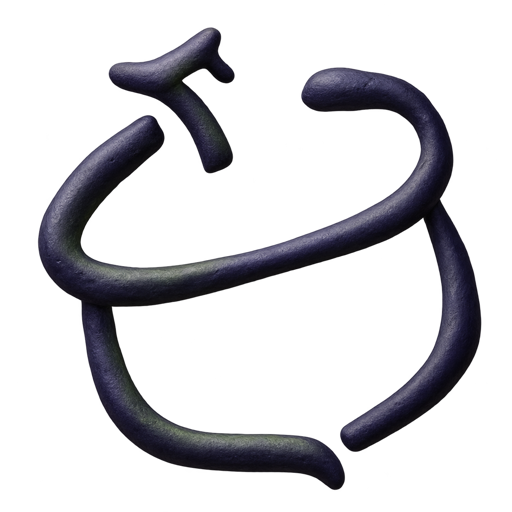
A diagonal line moves upward, representing increasing activation within the nervous system. At a certain point along that line, we reach what we might call our stress threshold. Beyond it, the line spirals outward. We are spun out. Executive functioning narrows, intention weakens, and behavior becomes less guided and more automatic.
Many people describe this simply as “fight or flight.” Often, however, the experience is more nuanced. We can be activated and still retain some executive capacity. A more precise description might be this:
We become dysregulated to the point that we lose significant executive function — the very capacities that allow us to guide our behavior in alignment with values, strategy, and self-respect.
At that moment, our behavior becomes more predictable. We are less authors of our responses and more products of the environment immediately surrounding us.
By enhancing our stress capacity, we can better manage our reactions and maintain control during stressful situations.
This is not a failure of character.
It is the nervous system doing exactly what it was designed to do.
Understanding stress tolerance through this image reveals three primary variables — each one quietly trainable.

Variable One: Distance to the Threshold
How far can you travel along that upward line before you spin out?
This distance reflects the breadth of your nervous system’s workable range — the space in which activation can be present without disorganizing you. Within this range, you can still think strategically. You can remain congruent with your values. You can choose rather than simply react.
Some people describe going from zero to ten instantly. Subjectively, this can feel absolutely true. Yet in many cases the nervous system has been signaling for some time. Activation was building. Physiological markers were present. The ascent simply went unrecognized.
Which brings us to the second variable.
Variable Two: Consciousness of the Ascent
How aware are you of your own rising activation?
This awareness draws upon several interwoven capacities:
- Self-reflection
- Interoception
- Attentional stability
- Psychological mindedness
- The willingness to notice without immediately correcting
Without awareness, stress appears abrupt — as though it arrived fully formed. With awareness, earlier signals become visible: muscular tension, subtle contraction in the chest, cognitive narrowing, urgency, irritability, shifts in breathing, the quiet emergence of impatience.
The trajectory becomes observable while we are still traveling it.
And once something becomes observable, it becomes influenceable.
Choice enters the system.
A person who can say internally, I am ascending right now, is already less captured by the ascent.
Variable Three: The Capacity to Re-Regulate
Once we have spun beyond the threshold, how effectively do we recover?
- How long does it take?
- How aware are we during the process?
- How skillful are the strategies we employ?
Breathing practices, grounding exercises, movement, sensory resets — these can all be deeply supportive. Yet culturally, we tend to place disproportionate emphasis here, on repair after rupture.
There is nothing misguided about learning to re-regulate. But an unintended consequence often emerges: people begin to experience shame about their perceived inefficiency in returning to baseline.
They wonder, Why does this take me so long? Why can’t I do this better?
Across nearly every domain of life, a simple principle holds:
Repair requires more energy than prevention.
Expanding the distance to our threshold and increasing awareness of our ascent are often more transformative than refining techniques for recovery after dysregulation.
Said differently — it is far less metabolically expensive to remain organized than to reconstruct organization after it collapses.
A Culture That Quietly Narrows Our Range
Modern life shapes the nervous system in ways we rarely pause to consider.
Many forms of adversity that once demanded adaptive range have been softened or removed from daily existence. Water arrives with the turn of a handle. Food is stored within reach. Waste disappears with a flush. Climate is regulated by thermostat. Shelter is reliable. Predators are absent.
These are profound achievements of civilization.
And the nervous system develops through contact with manageable stress.
When that contact narrows, our threshold often narrows with it — not because we are fragile, but because organisms adapt to the environments they repeatedly inhabit.
Consider how quickly distress can arise when a thermostat fails and the temperature shifts from a comfortable 68 degrees to 60 — or climbs unexpectedly toward 85. The experience can feel disproportionately intolerable.
Not as a commentary on our strength. As information about our range.
The organism acclimates to predictability. When variability appears, activation rises quickly.
This observation points toward an important possibility:
We may need to intentionally engage forms of adversity in order to expand our natural stress threshold.
- Not dramatic adversity.
- Not overwhelming adversity.
- Measured, chosen, workable adversity.
The kind that stretches without breaking.
Two Pathways Beyond the Threshold
When activation surpasses our workable range, responses often organize in one of two directions.
Internalization
- Withdrawal
- Avoidance
- Depressive collapse
- Rationalization
- Disengagement from effort
Externalization
- Yelling
- Aggression
- Impulsive action
- Confrontation
- Behavioral discharge
Externalizers tend to draw more social attention because their responses are visible. Internalizers often suffer more quietly, though the physiological activation may be just as intense.
Both represent nervous systems attempting, in their own ways, to resolve overload.
Neither is evidence of moral deficiency. Both are invitations to expand capacity.
Contriving Adversity
If our aim is to widen our threshold — to remain more resourced when life applies pressure — the question becomes gently practical:
How might we engage adversity in ways that strengthen rather than overwhelm us?
For me, one answer has been cold water submersion.
I live on a well. When I turn the shower to cold, it is unmistakably cold.
It is important to say that this example is both literal and metaphorical. Cold water is simply one accessible way of entering into intentional discomfort.
When I step under the water, the nervous system reacts immediately.
The mind begins negotiating:
You could step back. You could turn the knob. Why would you stay in something uncomfortable when relief is one small movement away?
A cognitive argument forms — an internal effort to make adversity disappear rather than tolerate it.
And this is where the practice begins.
Through differentiation, we learn to observe the automatic impulse without immediately obeying it. We notice the urge to escape. We notice the persuasive quality of the mind when it is trying to reduce discomfort.
At the same time, another pathway becomes available — one grounded in kindness rather than force.
We can validate the discomfort while reassuring the nervous system that the experience is purposeful.
- Not punitive.
- Not self-aggressive.
- Purposeful.
We might say internally:
Yes, this is uncomfortable. And you are choosing it for a reason. You are offering your nervous system experience within higher levels of sympathetic activation so that executive function remains available when stress inevitably arrives elsewhere.
Executive function stays online. Choice remains intact.
And as this experience repeats, something measurable begins to occur.
The threshold moves.
Gradually. Quietly.
We can travel further along the activation line before significant distress emerges.
What Else Begins to Change
As consciousness increases, another shift becomes visible.
We become aware not only of the discomfort, but of the automatic narratives attempting to govern our behavior. The mind predicts catastrophe — You’re going to freeze. This is too much. — even when the body is well within survivable limits.
Remaining present interrupts that prediction loop.
Differentiation grows.
We discover that an urge is not a command.
And perhaps more importantly, we begin learning the path of being kind to ourselves inside activation — validating, reassuring, steadying — rather than criticizing ourselves for feeling discomfort in the first place.
Over time, the nervous system starts to trust this leadership.
The Developmental Implications
This becomes particularly important when we consider children — though many adults will recognize themselves here as well.
A child encounters an environmental stressor, becomes activated, breaks a pencil, throws a book, declares the assignment stupid. Parents often find themselves asking, What do I do, even when my child understands what is happening?
Expanding stress tolerance is meaningful work for an adult nervous system. For a developing one, it may be foundational.
I am not offering medical guidance here, and questions about specific practices should always be discussed with qualified professionals. Yet the broader principle is worth holding:
Growth often requires experiences that stretch capacity while remaining inside the boundaries of safety.
And this is not limited to children.
Adults lean on horns. Get out of their cars and yell at strangers. Argue with flight attendants.
Activation does not discriminate by age.
The nervous system responds to range — or the absence of it.
Returning to Older Forms of Challenge
For much of human history, movement itself required resilience. We were more nomadic. Getting from point A to point B involved distance, unpredictability, changing weather, bodily fatigue.
Many of those demands have softened.
So we may need to reintroduce challenge with intention.
Imagine planning a hike.
You know you can comfortably walk two miles. Beyond that, your feet begin to ache. The air cools. Your breathing deepens. Muscles fatigue.
The experience is not unlike stepping into cold water.
The mind begins its commentary:
This is boring. My feet hurt. Why didn’t I pack a better sandwich? Maybe more mayonnaise would have helped.
Small discomforts begin presenting themselves as arguments for retreat.
Yet if we enter the experience knowingly — telling ourselves, our partners, our children:
We are choosing this. We are contriving adversity because our current environment does not reliably cultivate the stress tolerance we want to live with — the tolerance that allows us to remain congruent with our values when life becomes demanding.
— then the hike becomes something more than exercise.
It becomes nervous system training.
A compassionate override can emerge:
Yes, we are uncomfortable. And we are capable of continuing. We are going to make it to point B and back.
Along the way, we remain observant. Consciousness increases. The trajectory becomes visible rather than overwhelming.
And when we return, something subtle yet meaningful has occurred.
The threshold has nudged upward.
Not dramatically. Reliably.
Adversity as a Developmental Ally
None of this suggests that we should seek suffering or romanticize hardship. The aim is not endurance for its own sake.
The aim is capacity.
A nervous system that has practiced remaining oriented within discomfort becomes less governed by it. Executive functioning stays more available. Behavior aligns more readily with values. Choice expands.
Over time, everyday stressors — the slow driver, the unexpected inconvenience, the moment that once felt intolerable — begin to land differently.
Not because life has simplified. But because our range has widened.
Adversity, when engaged intentionally and compassionately, becomes less an obstacle and more a developmental ally — quietly increasing our ability to stay ourselves when pressure rises.
And in that collaboration, many of us discover something reassuring:
We are capable of more than the nervous system initially predicts.


